Safeguarding the Beautiful Game: DisasterAWARE Powers World Cup Health Security

With more than 6.5 million fans from over 100 countries converging on cities across the United States, Mexico, and Canada for the 2026 FIFA World Cup, the public health stakes are significant. The team is leveraging DisasterAWARE for timely, integrated situational awareness...
World Cup Stadium FIFA Opening Ceremony

By Alison Somilleda

06/12/2026

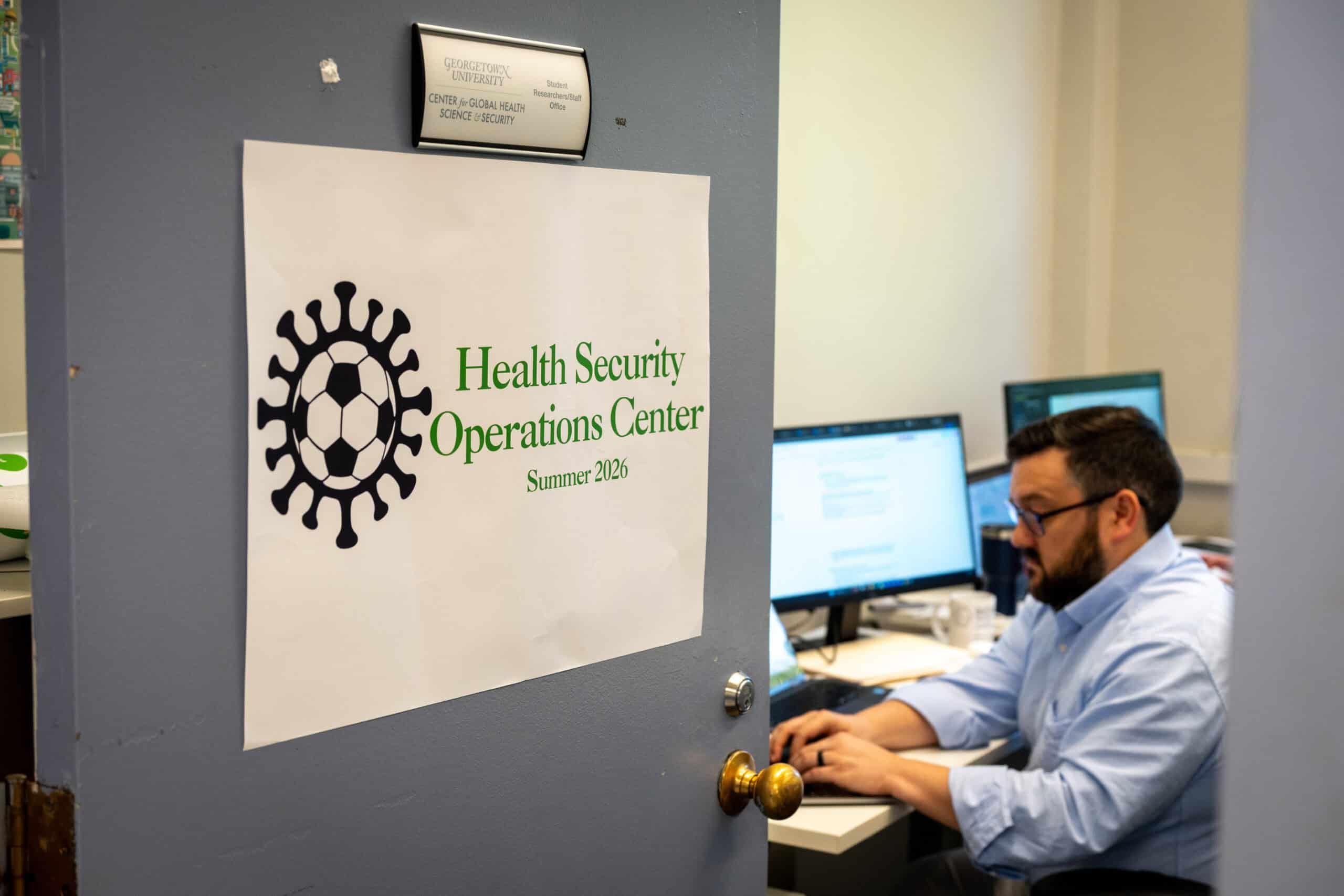
Georgetown University and MedStar Health leverage PDC’s DisasterAWARE capabilities inside the World Cup Health Security Operations Center (HSOC) for integrated and coordinated situational awareness.

Photograph: Pacific Disaster Center (PDC)

With more than 6.5 million fans from over 100 countries converging on cities across the United States, Mexico, and Canada for the 2026 FIFA World Cup, the public health stakes are significant. 

Mass gatherings at this scale create conditions where localized outbreaks can rapidly become international events—and where timely, integrated situational awareness is essential for the officials responsible for protecting public health. This summer, that critical role is being filled by a new Health Security Operations Center (HSOC) that relies on the University of Hawaiʻi’s Pacific Disaster Center (PDC)’s DisasterAWARE platform as a key data source and decision-support tool.

Georgetown University and MedStar Health established the HSOC under their joint National Center for Health Security and Resilience, with operations beginning June 1. The team is leveraging DisasterAWARE to fuse disparate data streams from wastewater surveillance, electronic health records, hospitalizations, and real-time health reports gathered across all 16 host cities—integrating and analyzing disease signals to give decision-makers early, actionable warning when risks emerge. More than 350 organizations, including hospital emergency managers, state and local health officials, and federal agencies, are enrolled to receive the HSOC’s daily situation reports.


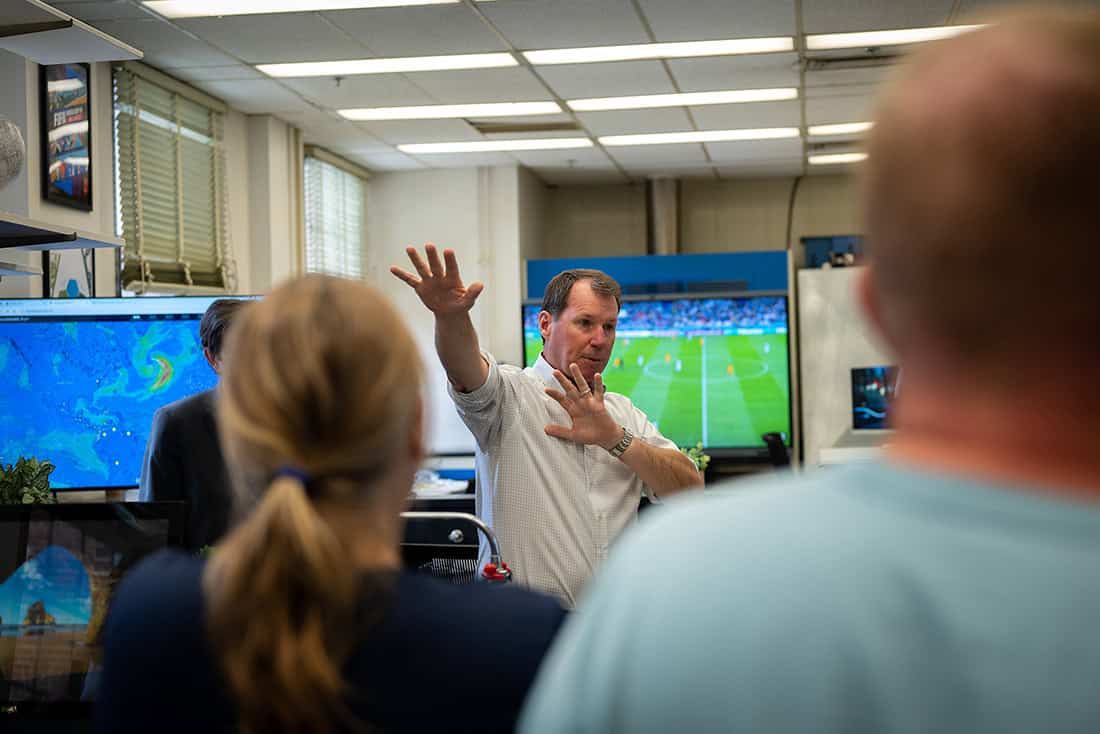
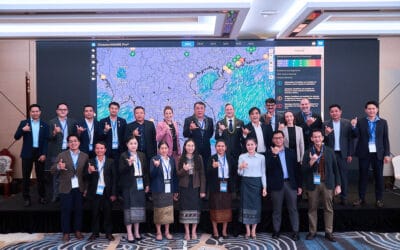
PDC’s Senior Advisor and former Deputy Administrator of FEMA helps HSOC team maximize the use of DisasterAWARE as the 2026 World Cup games commence.

Photograph: PDC

These capabilities are helping the HSOC visualize and quantify health risks across host city regions, and deliver the coordinated, multidisciplinary situational awareness that HSOC Director Rebecca Katz describes as impossible for any “single institution or jurisdiction to provide alone.”

“Working alongside MedStar and Georgetown officials on the inside of the HSOC, DisasterAWARE is revolutionizing how we monitor disease during large-scale events,” said Tim Manning, former Deputy Administrator of FEMA and Senior Advisor at PDC. “PDC’s hazard intelligence capabilities bridge health data streams from numerous sources into a single, coherent operating picture, significantly enhancing the way we protect public health when the world comes together.”

“DisasterAWARE is revolutionizing how we monitor disease during large-scale events.”

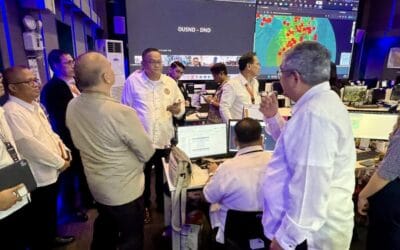
HSOC team members monitor World Cup 2026 health security from 16 different sources using the centralization capabilities of DisasterAWARE.

Photograph: PDC

Hazard Intelligence, Complex Missions

PDC’s support during this high-profile event shines a spotlight on the criticality of these capabilities at a global scale—and demonstrates how purpose-built hazard intelligence, applied at the intersection of technology and human expertise, can be rapidly adapted to meet complex, emerging missions far beyond its traditional domains. For an organization that has spent decades building the tools, frameworks, and partnerships that help nations anticipate and respond to disasters of every kind, supporting the HSOC is both a natural extension of that mission and a powerful affirmation of its global relevance.

“DisasterAWARE was built to deliver clarity in the world’s most complex, high-stakes environments…”

 “DisasterAWARE was built to deliver clarity in the world’s most complex, high-stakes environments, and a global event of this magnitude, the World Cup, is exactly that kind of environment,” said Erin Hughey, Deputy Executive Director of the Pacific Disaster Center. “Seeing our platform serve as a cornerstone of national health security operations at this scale is a powerful testament to what PDC has built over decades: a globally trusted capability that protects people wherever the threat originates.”

Get quarterly updates about our innovations and projects!
(Email Registration) Quarterly Email Updates
First
Last

ABOUT PDC

Pacific Disaster Center (PDC) is a leading scientific innovator of global risk reduction science and technology. As a University of Hawai’i applied science and research center, our work intersects with a variety of government, community, academic, and scientific organizations at home and around the world to build resilience to natural and man-made hazards—enhancing the capacity to quickly and accurately anticipate and prepare for new and emerging threats. Our innovations in multi-hazard early warning systems, predictive analytics, data science, and machine learning provide decision-makers with the powerful tools and insights they need to navigate today’s complex and interconnected risk landscape.

Related News