RIMPAC 2026: Preparing together for the Pacific’s inevitable disasters

Pacific Disaster Center (PDC), in partnership with the U.S. Pacific Command (US PACOM), and twenty-nine other nations, international organizations, and interagency partners, supported the humanitarian assistance and disaster response (HADR) component of Rim of the Pacific (RIMPAC) 2026...

By Chani Goering

07/20/2026

Militaries from across the Pacific join international organizations and interagency partners to engage in a three-phase HADR exercise during RIMPAC 2026.

Photograph: Commander, U.S. 3rd Fleet, RIMPAC 2026

PDC helps nations build collective disaster readiness during the HADR phase of the world’s largest international maritime exercise

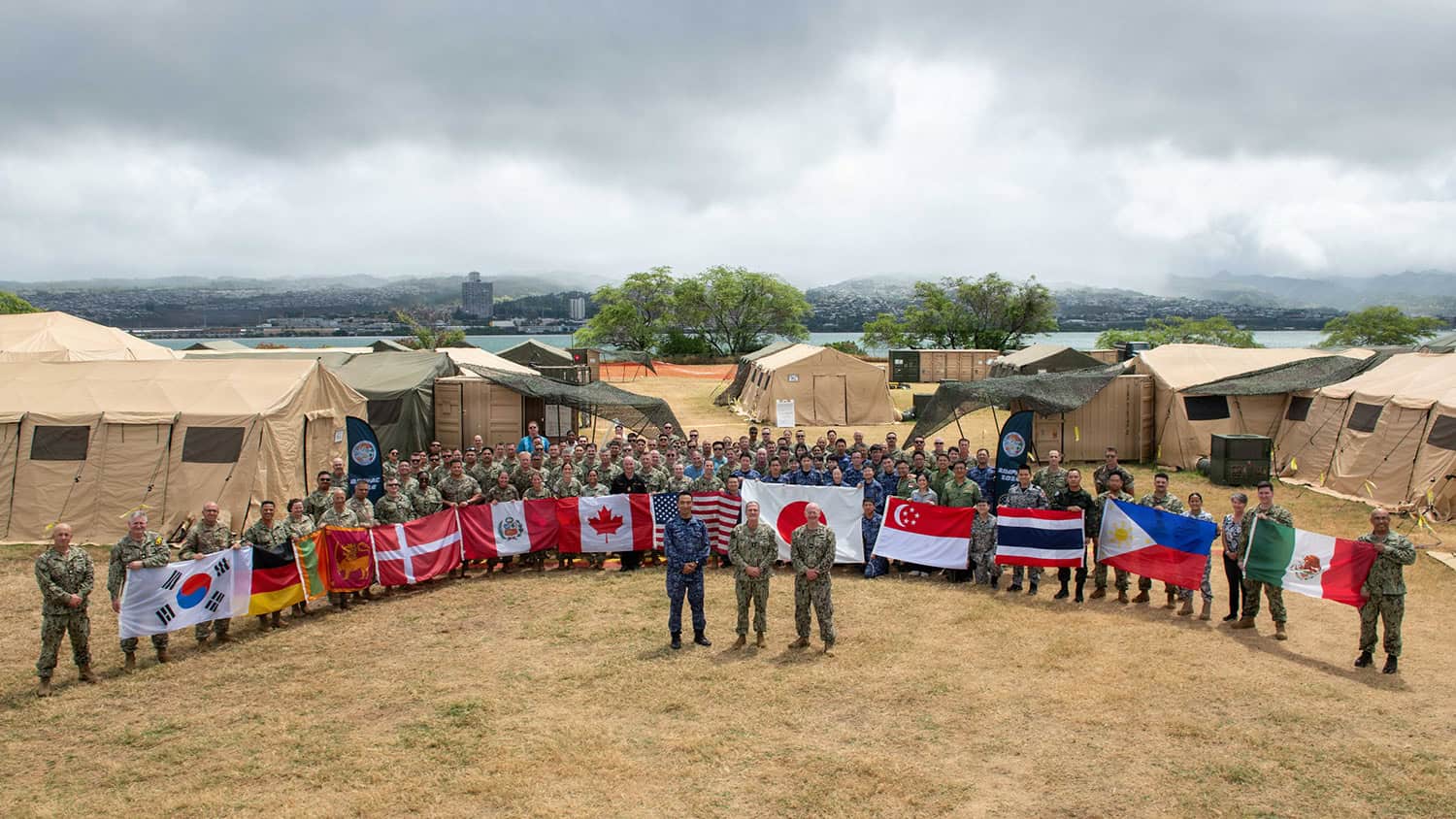
Oahu, Hawai’i—Pacific Disaster Center (PDC), in partnership with the U.S. Pacific Command (US PACOM), and twenty-nine other nations, international organizations, and interagency partners, supported the humanitarian assistance and disaster response (HADR) component of Rim of the Pacific (RIMPAC) 2026—the exercise’s 30th iteration since 1971.

Held in direct proximity to the Hawaiian Islands from June 24 through July 31, RIMPAC 2026 brings together 30 nations, more than 30 surface ships, five submarines, 15 national land forces, over 206 aircraft, and more than 30,000 personnel. Within that vast undertaking, the HADR exercise trains multinational military and civilian teams to collaborate when it matters most in the region: the arrival of the next major disaster.

“Humanitarian Assistance and Disaster Response is a vital part of RIMPAC. Across our region, natural disasters are not a matter of if, but when. “

“Humanitarian Assistance and Disaster Response is a vital part of RIMPAC. Across our region, natural disasters are not a matter of if, but when. When they occur, our ability to respond quickly and effectively strengthens regional stability, reinforces our partnerships, and saves lives,” said U.S. Navy Vice Adm. Jeffrey Jablon, deputy commander, U.S. 3rd Fleet and Exercise RIMPAC 2026 Combined Task Force.

PDC played a key role across all three phases of the HADR exercise, which included planning, academics, and execution. The academic portion, which included the Senior Staff Command Forum, HADR Symposium, and HADR Staff Planners Integration Course, deepened participants’ understanding of multinational disaster response coordination, humanitarian assistance operations, and the distinct roles military and civilian organizations play during major disasters. Subject matter experts from the United Nations Office for the Coordination of Humanitarian Affairs (UNOCHA), World Food Programme (WFP), Center for Excellence in Disaster Management and Humanitarian Assistance (CFE-DM), Changi Regional HADR Coordination Centre (RHCC), and PDC shared lessons learned and operational perspectives. The Center presented its HADR mission, DisasterAWARE capabilities, and advanced analytics—highlighting how real-time impact forecasting, hazard modeling, and information sharing support life-saving decisions before, during, and after disasters.


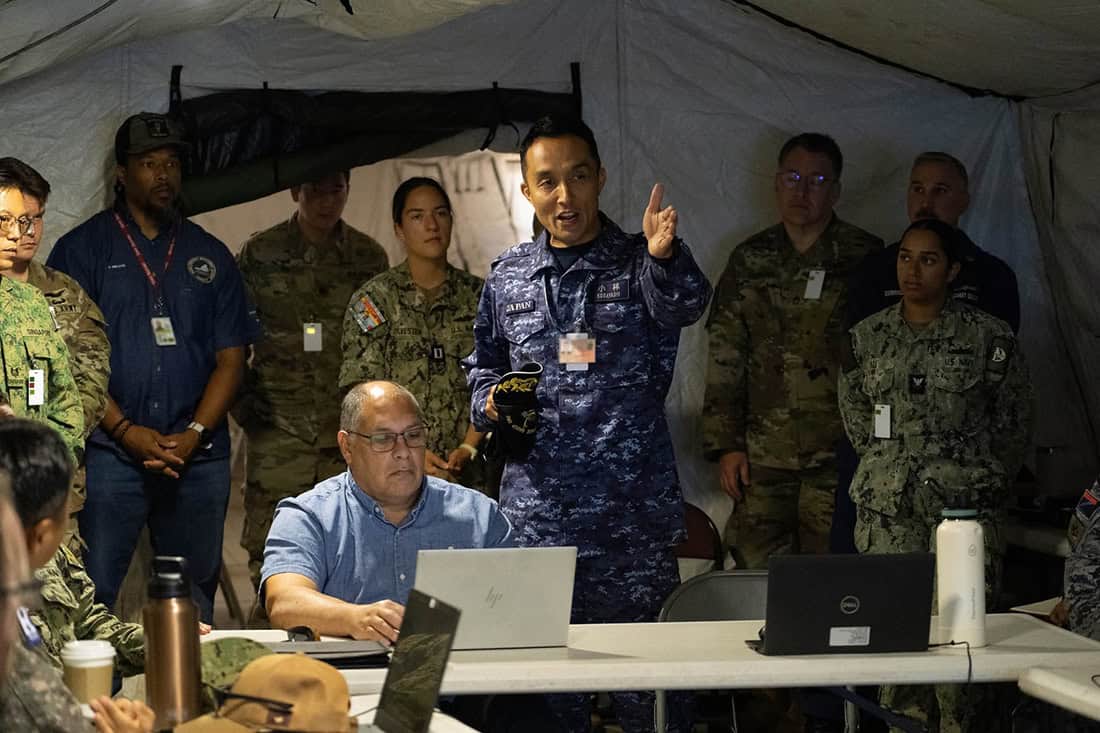
Pictured: Japan Maritime Self-Defense Force Rear Adm. Takuo Kobayashi, Exercise Rim of the Pacific (RIMPAC) 2026 Combined Task Force vice commander provides guidance to exercise participants during the first day of the Humanitarian Assistance and Disaster Response (HADR) exercise, July 7, 2026

Photograph:Commander, U.S. 3rd Fleet, RIMPAC 2026

“Principle one is build relationships before disaster strikes. This is perhaps the most consistently validated lesson across every major HADR operation. “

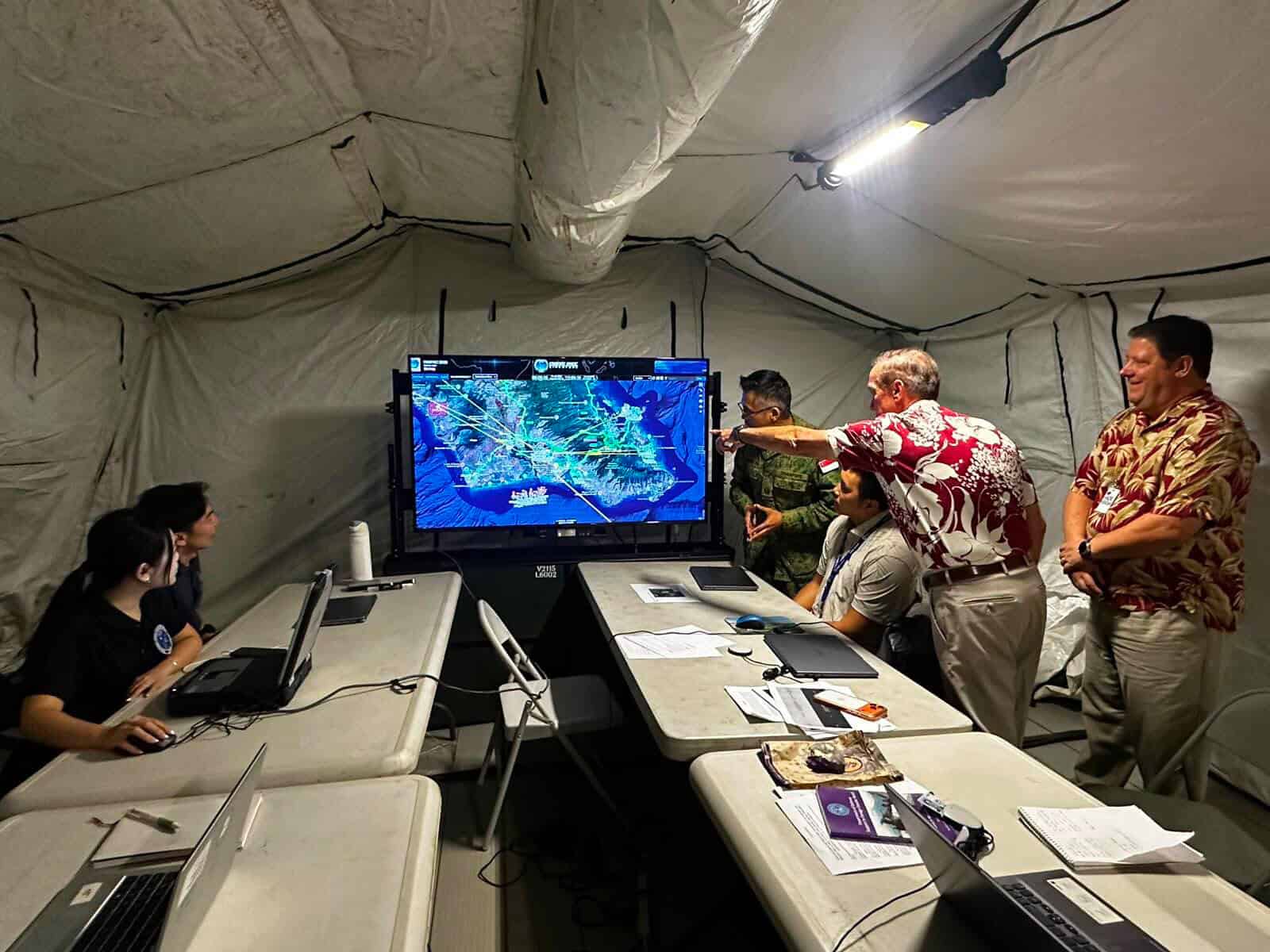
PDC provides hurricane exercise daily situational awareness through its advanced analytical products and DisasterAWARE technology ecosystem.

Photograph: Commander, U.S. 3rd Fleet, RIMPAC 2026

“Principle one is build relationships before disaster strikes. This is perhaps the most consistently validated lesson across every major HADR operation. When the earthquake hits, when the tsunami arrives, it is too late to exchange business cards,” said Japan Maritime Self-Defense Force Rear Adm. Takuo Kobayashi, Exercise RIMPAC 2026 Combined Task Force vice commander.

That principle came to life in the exercise scenario: a Category 3 hurricane making direct landfall and demanding a coordinated multinational response. Participants conducted urban search and rescue, aerial assessments, healthcare emergency management, port restoration, logistics operations, and disaster coordination—the full arc of a real-world response compressed into the execution phase.

“For the 2026 RIMPAC HADR exercise, PDC supported scenario development and execution with daily situational awareness briefs, executive updates, hurricane impact forecasts, and pre-landfall impact assessments.”

“For the 2026 RIMPAC HADR exercise, PDC supported scenario development and execution with daily situational awareness briefs, executive updates, hurricane impact forecasts, and pre-landfall impact assessments,” said Kalei Miller, PDC’s Senior Disaster Services Analyst and Liaison to US PACOM.

“We then shifted—just as in an actual disaster—to post-event damage assessments, needs analyses, and critical infrastructure status products built on PDC’s advanced modeling and analytics capabilities.”

Serving as White Cell support, Miller coordinated with humanitarian and military partners throughout the exercise, contributing to the master scenario event list development, request-for-assistance tracking, and overall design of the exercise.

Interoperability extended beyond the exercise floor through DisasterAWARE, providing a realistic demonstration of how partner systems can operate from a common foundation of disaster intelligence. DisasterAWARE synchronized data into Changi RHCC’s OPERA command-and-control platform, enhancing shared situational awareness and supporting data-driven coordination of assistance requests across the multinational force.

Through RIMPAC 2026, PDC reinforced the value of preparedness, information sharing, and coordinated decision-making while strengthening relationships with military and humanitarian partners throughout the Indo-Pacific region and beyond. The Center anticipates continued participation in future RIMPAC exercises and plans to integrate lessons learned from this year’s activity into its long-term training and development programs.

Get quarterly updates about our innovations and projects!
(Email Registration) Quarterly Email Updates
First
Last

ABOUT PDC

Pacific Disaster Center (PDC) is a leading scientific innovator of global risk reduction science and technology. As a University of Hawai’i applied science and research center, our work intersects with a variety of government, community, academic, and scientific organizations at home and around the world to build resilience to natural and man-made hazards—enhancing the capacity to quickly and accurately anticipate and prepare for new and emerging threats. Our innovations in multi-hazard early warning systems, predictive analytics, data science, and machine learning provide decision-makers with the powerful tools and insights they need to navigate today’s complex and interconnected risk landscape.

Related News