UNOCHA Office of the Pacific Islands and PDC partner on regional resilience

New agreement focuses on regional risk reduction and resilience building capacity among Pacific Island nations by establishing a framework for expanded regional collaboration and coordination into a structured, long-term partnership designed to support risk-informed decision-making before, during, and after disasters.

By Chani Goering

03/11/2026

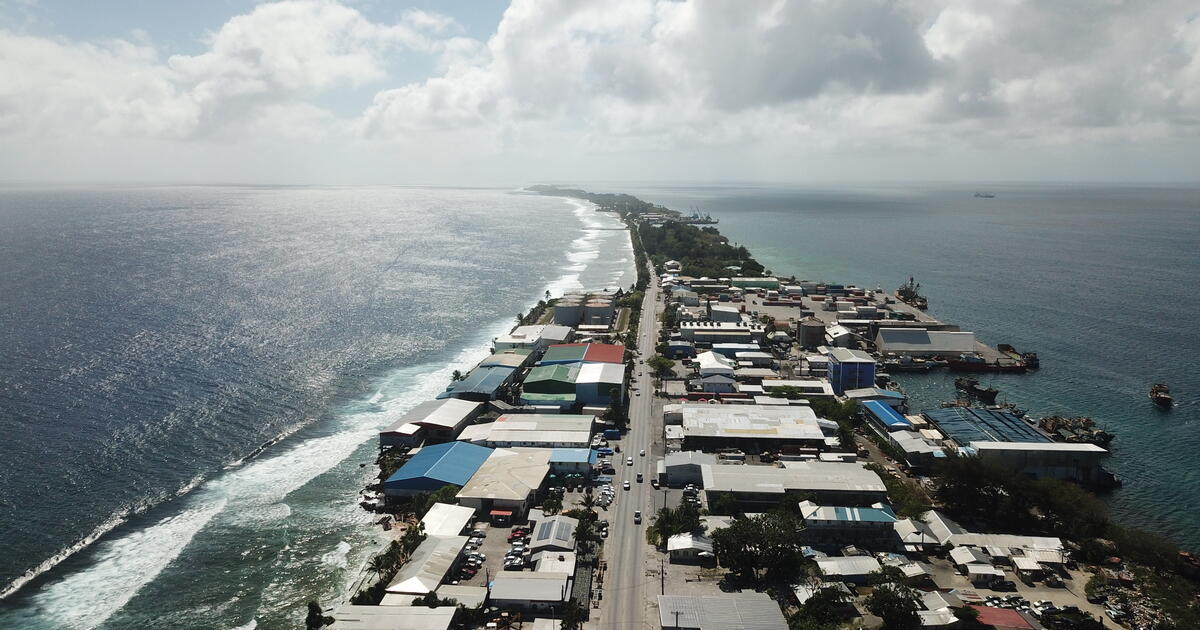
Pictured: Majuro atoll in the Marshall Islands, one of many vulnerable island communities to be covered under the PDC-OCHA Memorandum of Understanding.

Photograph: UNOCHA

UNOCHA’s Office of the Pacific Islands and Pacific Disaster Center (PDC) have formalized their partnership with a new Memorandum of Understanding (MOU), reinforcing a shared commitment to early warning, risk-informed decision-making, and coordinated disaster preparedness.

The new agreement focuses on regional risk reduction and resilience-building capacity among Pacific Island nations by establishing a framework for expanded regional collaboration and coordination into a structured, long-term partnership designed to support risk-informed decision-making before, during, and after disasters.

“This partnership brings together coordination, data, and decision support at a time when the Pacific needs all three working seamlessly. Through this collaboration, the OCHA Office of the Pacific Islands and the Pacific Disaster Center are strengthening how the region anticipates risk, prepares for impact, and makes decisions that save time – and lives,” said Olga Prorovskya, Head of Office, OCHA Office of the Pacific Islands.

“Together, we are reinforcing the foundations for a more prepared, resilient Pacific.”

“This partnership brings together coordination, data, and decision support at a time when the Pacific needs all three working seamlessly.”

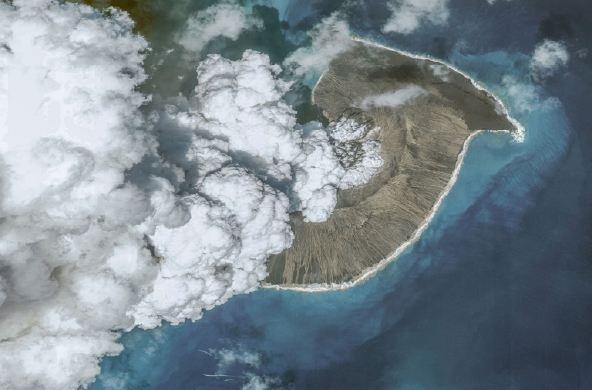
Pictured: A 2022 Hunga Haʻapai volcanic eruption in Tonga was the largest atmospheric explosion recorded by modern instruments, triggering a tsunami with waves up to 15 meters. The event cost approximately $182 million in damage, compromising ecosystems, and threatened lives. Events like these have a significantly higher impact on small island communities, making real-time early warning, risk planning, and awareness even more critical.

Photograph: National Geographic

Spanning 14 Pacific Island countries and territories within OCHA’s area of responsibility, the partnership is focused on improving the flow of information across the disaster management cycle. Through responsible data sharing and information exchange, the collaboration enhances access to authoritative hazard exposure and impact data—ensuring the countries’ National Disaster Management Organizations (NDMOs) have timely, actionable insights when they matter most. Importantly, the partnership supports coordination on how data and analytics are operationalized to support real-world decisions, not just how information is exchanged.

…It’s about ensuring that risk information is actionable when it’s needed most.

“The Pacific faces some of the world’s most complex and compounding disaster risks,” said PDC’s Director of Information Technology, Cassie Stelow. “This partnership goes beyond sharing data—it’s about ensuring that risk information is actionable when it’s needed most. Working alongside OCHA and national partners, we are strengthening the tools and processes that support coordinated preparedness and response across the Pacific.”

By leveraging existing technologies such as PDC’s DisasterAWARE platform, the partnership supports national governments’ ability to anticipate hazards, assess potential impacts, and coordinate response actions. Shared systems and aligned workflows will help bridge regional and national efforts, contributing to a more resilient and prepared Pacific.

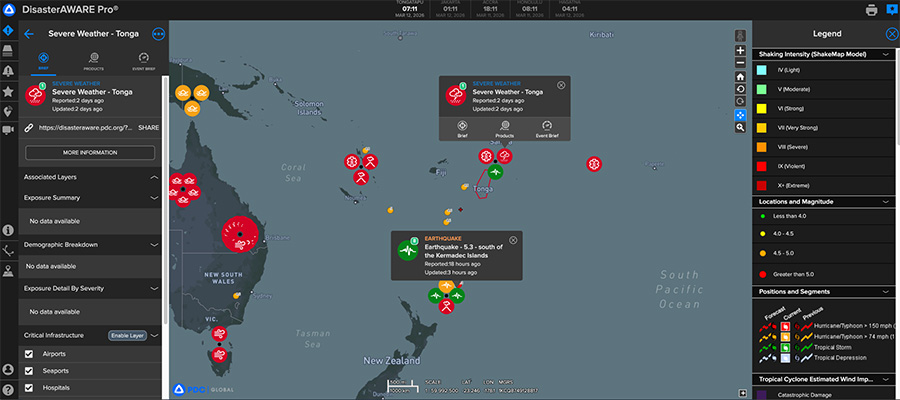
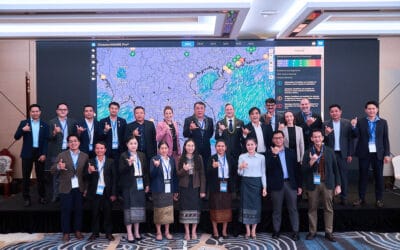
PDC’s DisasterAWARE Pro platform will provide critical access to early warning, risk insights, and advanced analytics to aid disaster response, coordination, and planning throughout the region.

Photograph: PDC

Fiji, home to the OCHA Office of the Pacific Islands, is highlighted as a key regional partner and hub for disaster coordination. Ongoing collaboration with the Fiji National Disaster Management Office (NDMO) will continue to support regional preparedness initiatives and reinforce Fiji’s role in strengthening collective disaster readiness across the Pacific.

Together, UNOCHA’s Office of the Pacific Islands and PDC are advancing a more connected, risk-informed approach to disaster preparedness—one that enhances regional resilience and supports Pacific Island nations in protecting lives, livelihoods, and communities.

“Together, with the Office of the Pacific Islands, we will be able to better support Pacific Island communities, leveraging our understanding of the unique challenges this region faces.”

“This partnership expands PDC’s global coverage and builds upon years of successful partnership between our Center and UNOCHA. Together, with the Office of the Pacific Islands, we will be able to better support Pacific Island communities, leveraging our understanding of the unique challenges this region faces,” said PDC’s Executive Director Ray Shirkhodai, pointing to the expertise the Center has gained while situated in the Pacific supporting the complex disaster risk profile of the Hawaiian Islands.

Get quarterly updates about our innovations and projects!
(Email Registration) Quarterly Email Updates
First
Last

ABOUT PDC

Pacific Disaster Center (PDC) is a leading scientific innovator of global risk reduction science and technology. As a University of Hawai’i applied science and research center, our work intersects with a variety of government, community, academic, and scientific organizations at home and around the world to build resilience to natural and man-made hazards—enhancing the capacity to quickly and accurately anticipate and prepare for new and emerging threats. Our innovations in multi-hazard early warning systems, predictive analytics, data science, and machine learning provide decision-makers with the powerful tools and insights they need to navigate today’s complex and interconnected risk landscape.

Related News