Key Response Challenges
1 – Multi-Island Situational Awareness and Response Coordination: Simultaneously managing threats from flooding, landslides, and potential dam failures requires immediate access to real-time, authoritative hazard information, as well as population, infrastructure, and critical risk data to inform effective decisions. This information is often siloed across agencies.
Furthermore, achieving a unified operational picture across Hawai’i’s dispersed islands is inherently difficult without tools to support sharing of information.
2 – Access to Multi-Hazard Information and Critical Data: Storm intensity, flash flood conditions, landslide risks, and dam vulnerabilities varied significantly by island and evolved rapidly, making it challenging for county and state agencies to track the full scope of impacts in real time and allocate resources where needed most.
3 – Rapid Quantification of Impacts Pre- and Post-Landfall: Obtaining reliable estimates of impacts to population and infrastructure requires rapid synthesis of complex data in order to quickly and effectively inform response, resource prioritization, and recovery planning. Few, if any agencies have this resource while responding to a disaster.
Integrating Statewide Situational Awareness
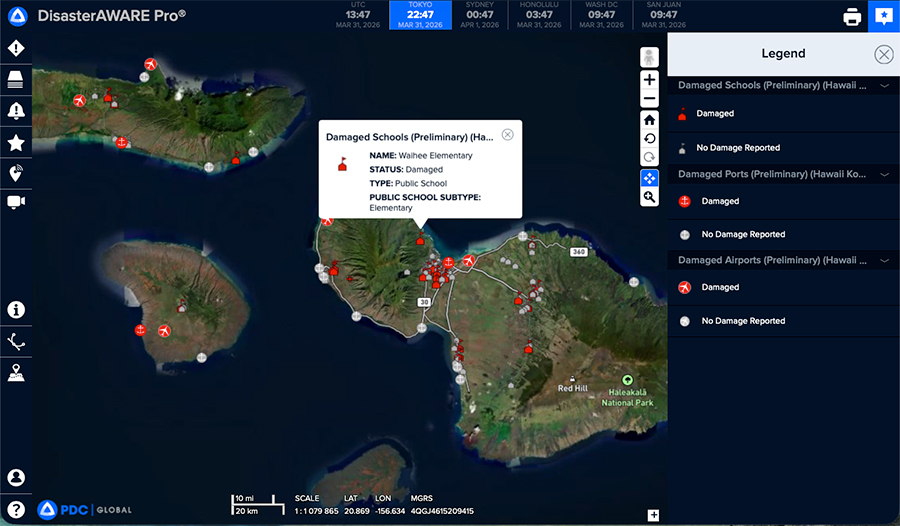
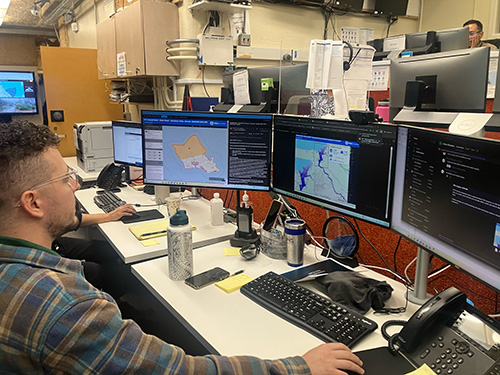
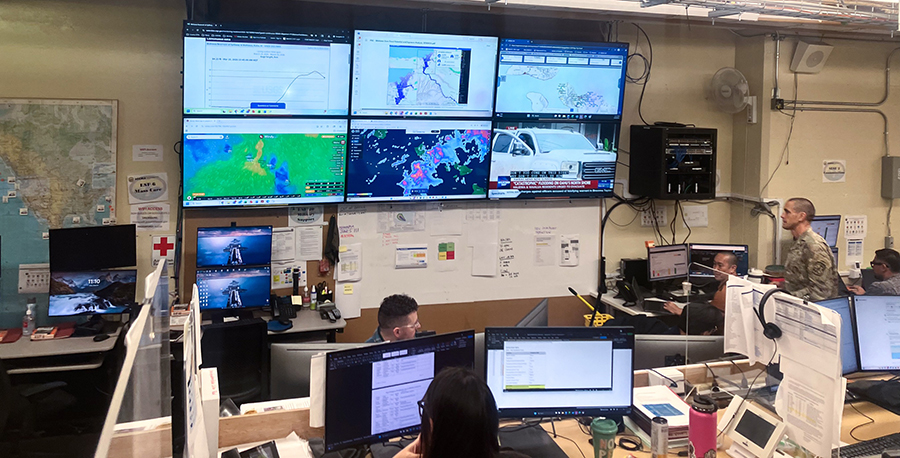
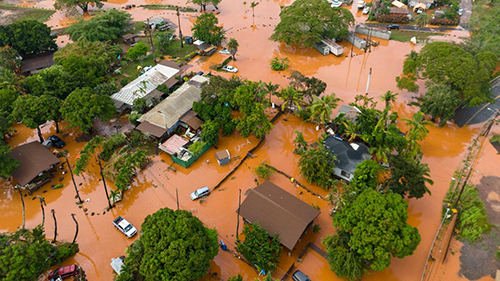
Coordinating life-saving response across the dispersed island chain demanded a level of integrated situational awareness and advanced impact analysis that only PDC could provide. The compound nature of the event—simultaneous flooding, landslides, and dam failure risk across multiple islands as well as a key weather radar outage—created an unprecedented demand for authoritative hazard information and shared situational awareness. Consolidated, scientifically vetted information was provided to decision makers through a single common operational picture, accessible to all agencies via the Center’s DisasterAWARE ecosystem. DisasterAWARE was essential for bridging critical information gaps and obtaining rapid impact estimates to help direct resources.

 Severity:
  Areas impacted:
  Total Estimated Damages:
  Evacuations:
 Airports:
  Seaports:
  Highways:
  Agriculture:
  Hospitals:
  Hospitals: