Working together to strengthen disaster resilience in Lao PDR

Lao PDR initiative to reduce risk and build resilience gains momentum with Disaster Resilience Worskhop and National Disaster Preparedness Baseline Assessment mid-term review and exchange.

By Victoria Leat

09/02/2026
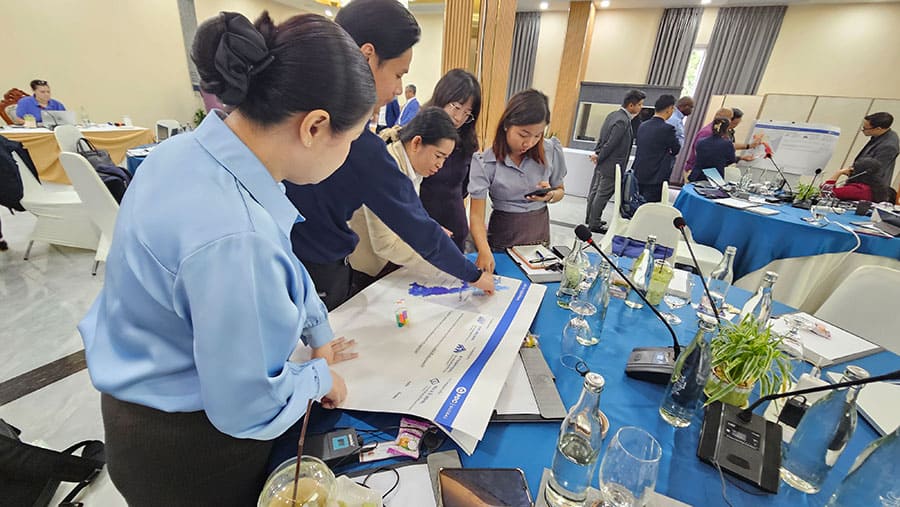
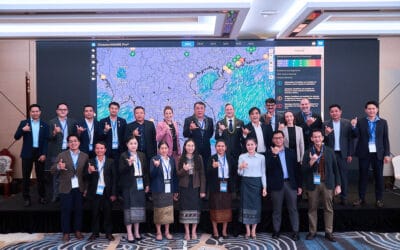
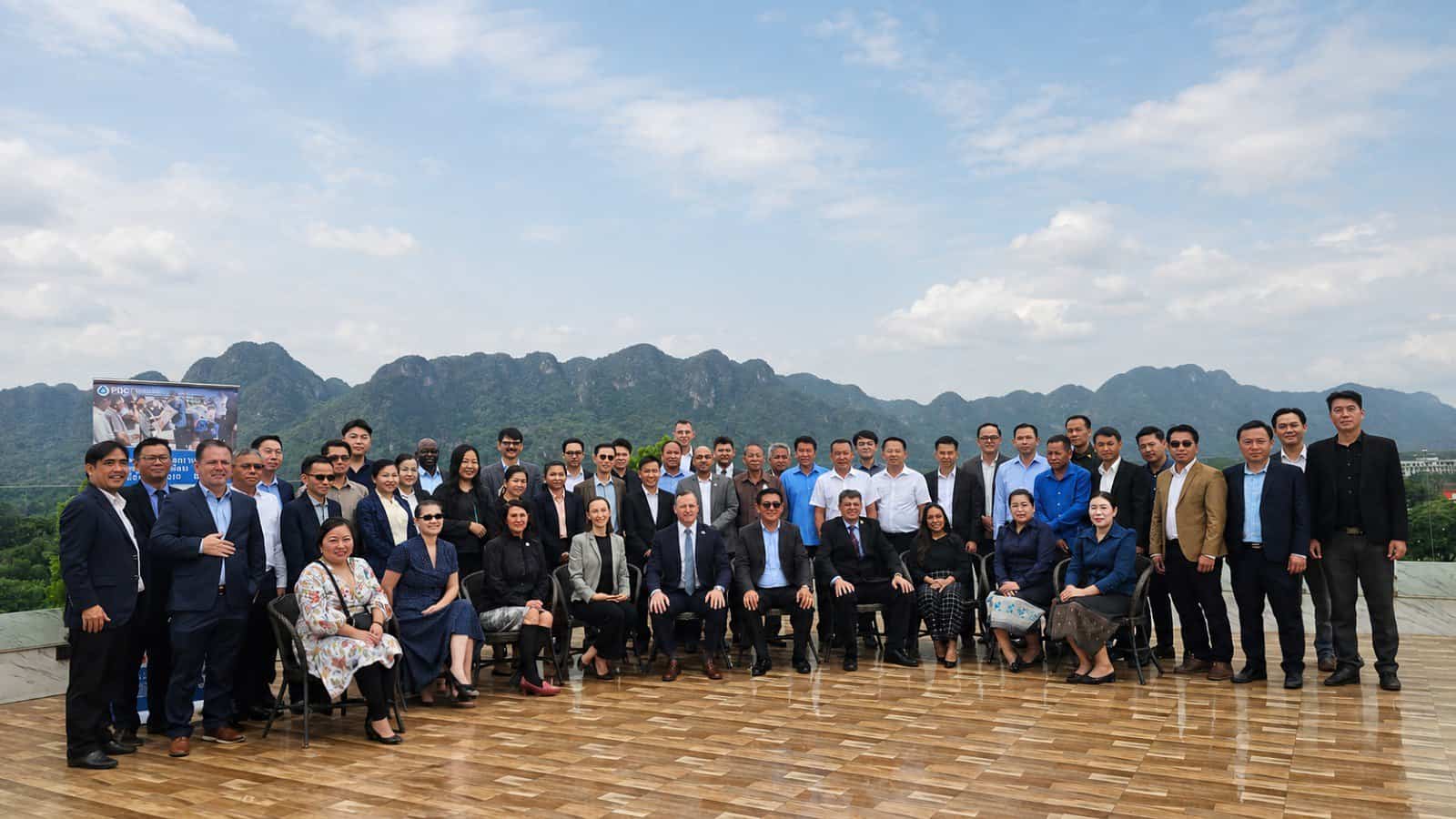
Participants validate risks and vulnerabilities across Lao PDR as part of the National Disaster Preparedness Baseline Assessment (NDPBA) and Disaster Resilience Workshop.
Photograph: PDC

VANG VIENG, Lao PDR – Building resilience requires more than plans, policies, and technology. It requires people and institutions working together around a shared understanding of risk and commitment to action.

That spirit of collaboration was on display in Vang Vieng from August 18-20, where the Lao PDR Ministry of Labour and Social Welfare (MoLSW), in partnership with the Pacific Disaster Center (PDC) and the Center for Excellence in Disaster Management and Humanitarian Assistance (CFE-DM), convened government agencies, provincial authorities, humanitarian organizations, and international partners for an intensive, three-day Disaster Resilience Workshop.

Funded by CFE-DM and coordinated with the U.S. Embassy Vientiane, the event brought together representatives from Lao PDR government institutions at national, provincial and district levels, including the Ministry of Agriculture and Environment, the Lao Statistics Bureau, the Lao People’s Armed Forces, alongside the Lao Red Cross, United Nations agencies, and the U.S. Department of State. Participants representing different organizations and perspectives, shared a common goal: strengthening disaster preparedness and resilience across Lao PDR.

“Through this event, we are creating a shared experience together to enhance disaster risk reduction in Lao PDR and to develop the data and information needed to build resilience.”

“Lao PDR has experienced many challenges. Through this event, we are creating a shared experience together to enhance disaster risk reduction in Lao PDR and to develop the data and information needed to build resilience,” said Mr. Mixay Sengchanthavong, Deputy Director General of the Social Welfare Department, Ministry of Labour and Social Welfare.

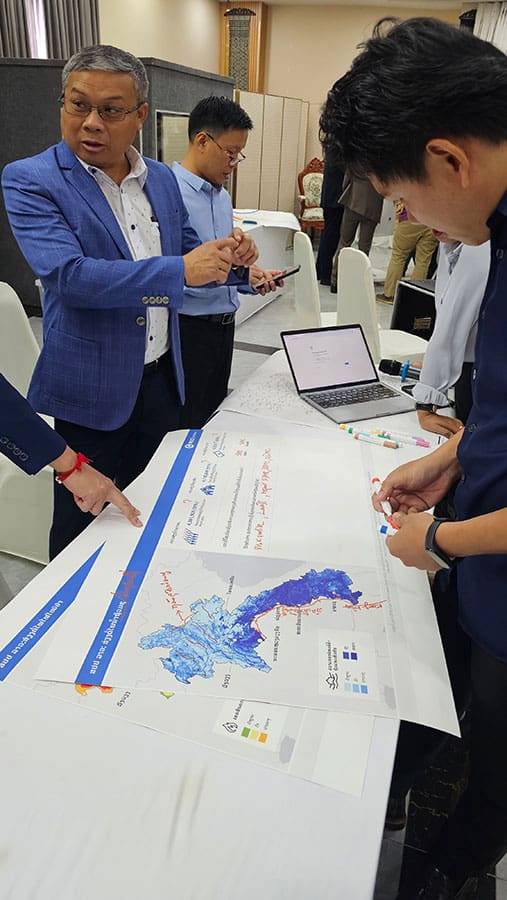
Stakeholders across Lao government sectors identify key hazard zones and help estimate population exposure during the NDPBA mid-term workshop and assessment review.

Photograph by PDC

Leveraging science and local knowledge

A key focus of the workshop was ensuring that disaster risk reduction efforts in Lao PDR are informed by both science and local knowledge. Stakeholders provided input to support the National Disaster Preparedness Baseline Assessment, reviewed hazard information, identified additional data sources, and shared operational experiences from across the country. The discussions helped connect national priorities with the realities faced by communities and responders on the ground.

“The challenges we face today are increasingly interconnected. As a result, resilience depends on our ability to develop a shared understanding of risk and a shared commitment to action. This is why this event is so important,” said Victoria Leat, Asia Pacific Advisor and National Disaster Preparedness Baseline Assessment Country Lead.
As disaster risks become increasingly complex and interwoven, effective resilience-building depends on strong partnerships that extend across sectors and levels of government. Throughout the workshop, participants exchanged experiences, examined disaster management challenges, and explored opportunities to strengthen coordination and preparedness efforts nationwide.

Participants also highlighted the importance of building on existing partnerships and lessons learned.

Flash flooding is just one of many hazards that present a significant threat to populations in Laos.

Photograph by PDC

“We must build on previous efforts and partnerships to help shape disaster risk reduction moving forward.”

“We must build on previous efforts and partnerships to help shape disaster risk reduction moving forward,” said Lloyd Puckett of CFE-DM.

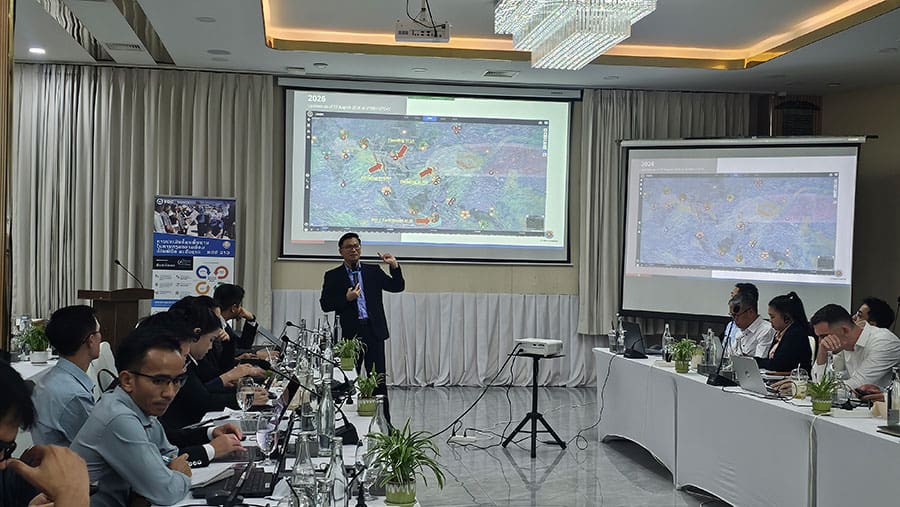
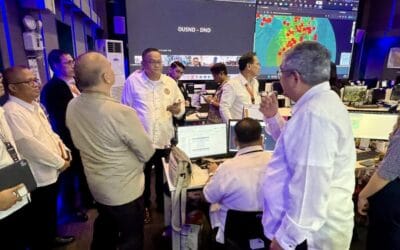
Workshop participants exercise disaster management decision-making using DMRS, a custom version of PDC’s DisasterAWARE technology developed for the ASEAN Coordinating Centre for Humanitarian Assistance (AHA Centre) and used operationally to support the entire ASEAN region.

Photograph by PDC

Integrating exercises and technology to improve coordination

Going deeper than discussion and knowledge exchange, the workshop included scenario-based exercises in which participants worked together to examine how institutions communicate, coordinate, and make decisions during disasters. For many attendees, the tabletop exercise provided a valuable opportunity to strengthen relationships, test assumptions, and better understand the roles and capabilities of partner organizations before a real emergency occurs.

Technology and risk information were also identified as important enablers of resilience. Following demonstrations of disaster management tools and capabilities, participants discussed how improved access to data can support preparedness planning and more informed decision-making.

“Addressing today’s challenges requires versatile and dynamic tools.”

“Addressing today’s challenges requires versatile and dynamic tools,” said U.S. Embassy Mission Disaster Relief Officer John Drollette, emphasizing the value of the capabilities provided through the partnership with PDC partnership. Additionally, participants emphasized that technology is most effective when combined with strong institutions, trusted partnerships, and a shared commitment to protecting communities.

The workshop demonstrated MoLSW’s leadership in bringing together stakeholders from across government, humanitarian, and development sectors to advance a common vision for disaster resilience in Lao PDR. By creating a platform for collaboration, knowledge-sharing, and joint problem-solving, the ministry reinforced the importance of collective action in addressing the country’s evolving disaster risks.

As Lao PDR continues advancing the National Disaster Preparedness Baseline Assessment, the relationships strengthened and insights generated during the workshop will help support evidence-based planning, stronger disaster management capabilities, and a more resilient future for communities across the country.

 

Get quarterly updates about our innovations and projects!
(Email Registration) Quarterly Email Updates
First
Last

ABOUT PDC

Pacific Disaster Center (PDC Global) is a leading scientific innovator in disaster risk reduction science and technology. As a University of Hawai’i applied science and research center, our work intersects with government, community, academic, and scientific organizations at home and around the world to build resilience to natural and man-made hazards. We enable communities to confront disasters more effectively by enhancing the capacity to rapidly anticipate and prepare for new and emerging threats using our AI-powered multi-hazard early warning technology, DisasterAWARE, predictive analytics, data science, and machine learning. For more than 30 years, PDC innovations have equipped decision-makers with the powerful tools and insights they need to navigate today’s complex and interconnected risk landscape.

PDC received prestigious recognition from the United Nations for its international impact in 2022, being granted the once-in-a-lifetime U.N. Sasakawa Award for Disaster Risk Reduction.

Related News