Maritime Disaster Leads to the Activation of the Space and Major Disasters International Charter
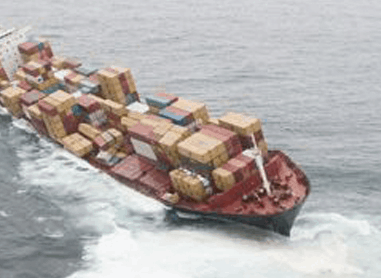
When hazardous materials are released into the environment they can pose significant threats to public health and require costly environmental remediation. On October 5, 2011, the container ship MV Rena ran aground on the Astrolabe Reef off the port of Tauranga, New Zealand. An estimated 350 tons of oil leaked into the Bay of Plenty’s pristine waters, making the spill the worst maritime environmental disaster in New Zealand’s history.
In an effort to detect pollution and minimize environmental damage, the U.S. Geological Survey (USGS) requested an activation of the International Charter, a global collaboration that provides rapid access to satellite data to help manage natural and technological disasters. The USGS appointed PDC to manage the project. Working in cooperation with Charter members and the Marine Environment Division of Australia, PDC communicated with Maritime New Zealand to clarify data requirements, coordinated acquisition of relevant data with satellite imagery providers, and processed raw images into usable formats. The satellite imagery provided via the Charter activation was critical to identifying the spread of oil and floating debris, which helped mitigate a potentially larger environmental disaster.
ABOUT PDC
Pacific Disaster Center (PDC) is a leading scientific innovator of global risk reduction science and technology. As a University of Hawai’i applied science and research center, our work intersects with a variety of government, community, academic, and scientific organizations at home and around the world to build resilience to natural and man-made hazards—enhancing the capacity to quickly and accurately anticipate and prepare for new and emerging threats. Our innovations in multi-hazard early warning systems, predictive analytics, data science, and machine learning provide decision-makers with the powerful tools and insights they need to navigate today’s complex and interconnected risk landscape.