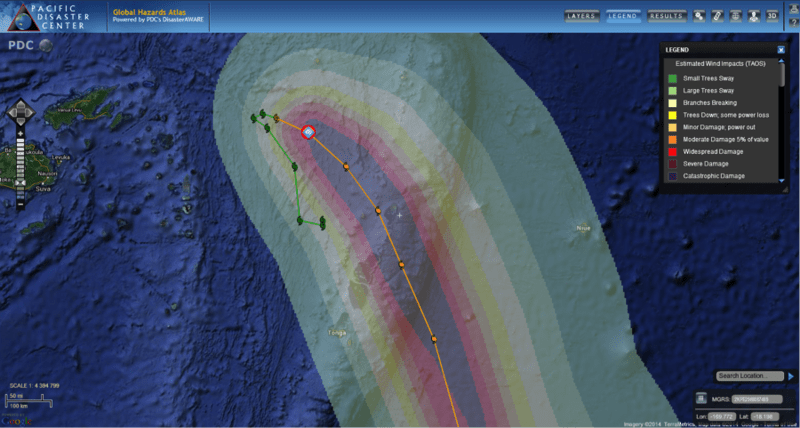
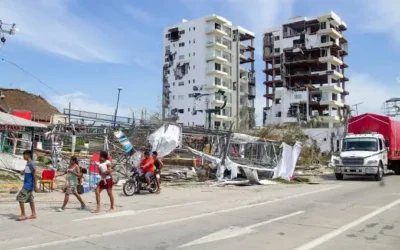
Destructive winds, powerful thunderstorms, and dangerous ocean conditions are heading for the South Pacific island nation of Tonga as Tropical Cyclone Ian nears the area after hovering nearby for the past few days. As reported by the Fiji Meteorological Service, Ian is moving slowly in an east- southeast direction, and is expected to reach the Vava’u island chain on Saturday morning, January 11, local time.
According to the Australia Network News, the Director of Tonga’s National Emergency Management Office, Leveni Aho, said that the northern islands should prepare for the worst, with the storm particularly threatening the islands of Vava’u and Ha’apai. Aho urged residents to prepare necessities such as food and water, as well as charge radios and mobile phones to maintain communication. Residents are also advised to keep away from low-lying and coastal areas.
The United Nations Office of Coordination of Humanitarian Affairs (UN OCHA) reported that the Government of Tonga called a National Emergency Management Committee meeting on the evening of January 8, local time, and activated the National Emergency Operations Centre (EOC). The EOC is working with the national radio station to provide warnings and updates to the communities in the northern islands.
Tropical Cyclone Ian is the South Pacific’s first cyclone of the summer season and there are currently three additional areas of disturbed weather in the Pacific and Indian Oceans with the potential to develop into tropical cyclones.
For more information on Tropical Cyclone Ian:
• Visit the Tonga Meteorological Service,
• Visit the Fiji Meteorological Service,
• Look at the Joint Typhoon Warning Center’s website,
• Follow OCHA Flash Updates, and
• Take a look at PDC and Tonga’s post tsunami reconstruction project.
ABOUT PDC
Pacific Disaster Center (PDC) is a leading scientific innovator of global risk reduction science and technology. As a University of Hawai’i applied science and research center, our work intersects with a variety of government, community, academic, and scientific organizations at home and around the world to build resilience to natural and man-made hazards—enhancing the capacity to quickly and accurately anticipate and prepare for new and emerging threats. Our innovations in multi-hazard early warning systems, predictive analytics, data science, and machine learning provide decision-makers with the powerful tools and insights they need to navigate today’s complex and interconnected risk landscape.