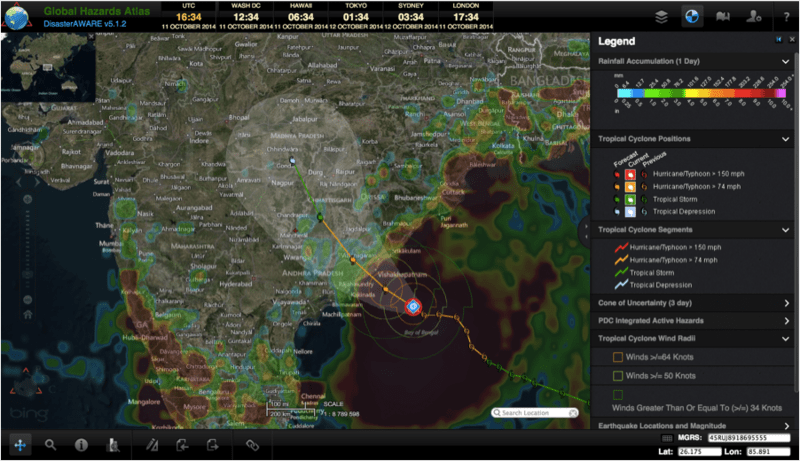
Tropical Cyclone Hudhud brought torrential rains, and powerful winds, as it made landfall at typhoon strength near the city of Visakhapatnam in the Indian state of Andhra Pradesh on Sunday, October 12 (local time). Prior to the cyclone’s arrival, disaster preparedness measures were implemented, including the issuing of early warnings by the Indian Meteorological Agency (IMD), the deployment of National Disaster Response Force (NDRF) teams, the pre-positioning of rations at shelters, and mass evacuations for people in the cyclone’s path, according to a ReliefWeb report on advance actions by the Government of India.
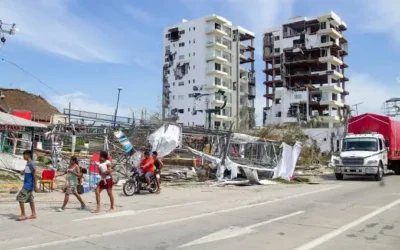
Despite significant disaster risk reduction efforts, the sheer strength and size of Hudhud left a trail of destruction, including casualties, which are still being assessed. The city of Visakhapatnam bore the brunt of the cyclone, sustaining damages to the airport, buildings, roads, and telecommunications. The International Federation of the Red Cross and Red Crescent Societies (IFRC) has released a situation bulletin regarding how state disaster management authorities of Andhra Pradesh and Odisha took the lead in early warning, evacuations, and deployment of state and national disaster response force teams.
In Andhra Pradesh, detailed damage assessments are being conducted by the state government. Indian Prime Minister Narendra Modi visited Visakhapatnam on Tuesday. He inspected the extent of the damage to the airport, reviewed the situation with state authorities, and promised funding for recovery and for the families of those who lost their lives in to Hudhud, the Times of India reported.
According to the latest bulletin from the IMD, on Tuesday, October 14, Hudhud had significantly weakened and is now a deep depression, causing heavy rainfall to a few areas over the states of Bihar, eastern Uttar Pradesh, eastern Madhya Pradesh and Jharkhand.
Tropical Cyclone Hudhud hit India exactly one year after Tropical Cyclone Phailin heavily damaged the Indian state of Odisha, which was largely spared as Hudhud veered into a slightly different path.
For more information on Tropical Cyclone Hudhud:
• Visit the India Meteorological Agency for the latest bulletins,
• Look at sitautional reports from the Ministry of Home Affairs, and
• View a situational overview from the IFRC.
ABOUT PDC
Pacific Disaster Center (PDC) is a leading scientific innovator of global risk reduction science and technology. As a University of Hawai’i applied science and research center, our work intersects with a variety of government, community, academic, and scientific organizations at home and around the world to build resilience to natural and man-made hazards—enhancing the capacity to quickly and accurately anticipate and prepare for new and emerging threats. Our innovations in multi-hazard early warning systems, predictive analytics, data science, and machine learning provide decision-makers with the powerful tools and insights they need to navigate today’s complex and interconnected risk landscape.