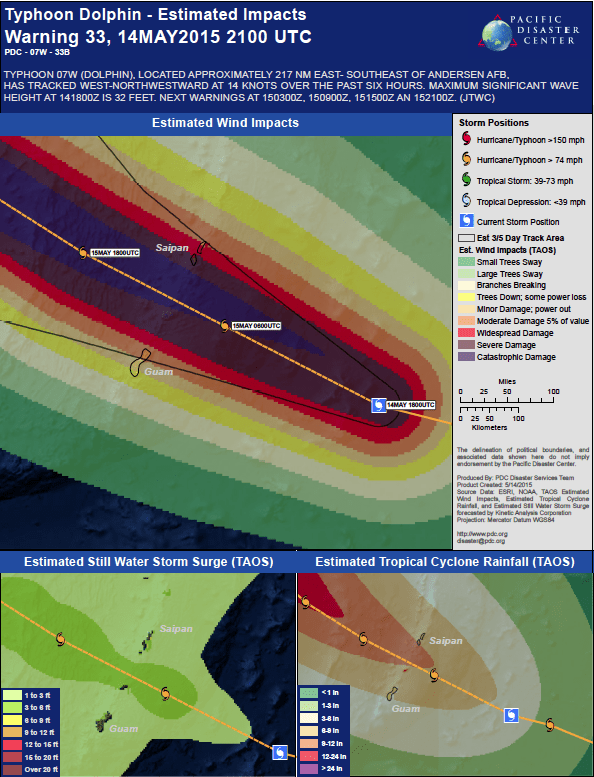
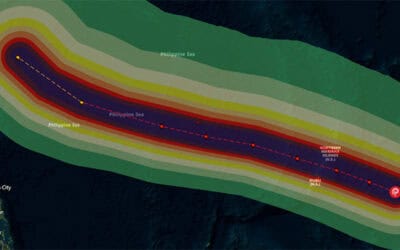
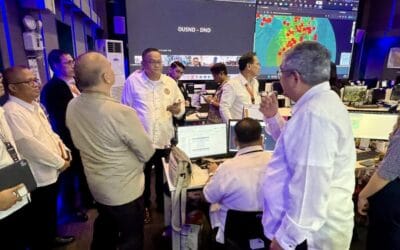
Adverse weather conditions are beginning to reach the Mariana Islands, as Typhoon Dolphin nears the archipelago in the northwestern Pacific. Residents are preparing for powerful winds, storm surge, storm tide, and flooding throughout the islands of Guam, Rota, Tinian, and Saipan, according the to latest National Weather Service local statement from the Forecast Office in Guam.
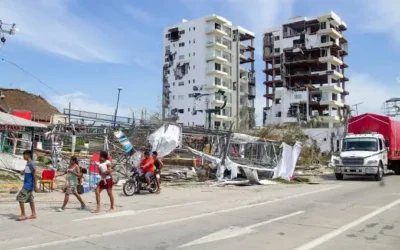
Under these conditions structures may become damaged, losing roofs or facing collapse. Loose items can become airborne, large branches of trees may snap, or trees maybe uprooted, and residents may face the loss of services, such as electricity and water. Along the coast dangerous surf and coastal inundation may occur and residents have been advised to complete final preparations to protect life and property, including quickly moving to safe shelter.
Typhoon Dolphin is expected to continue to strengthen over the next couple of days. Residents and mariners are urged to heed the advice of local officials and closely monitor official storm information as the situation continues to develop.
Pacific Disaster Center is providing decision support and situational awareness products via DisasterAWARE and will continue to monitor for the duration of the event. If you are an emergency manager and would like access to PDC’s DisasterAWARE platform through EMOPS, please apply for an account at emops.www.pdc.org.
Click here to learn more about tropical cyclones.
For more about Typhoon Dolphin:
• Visit the PDC Weather Wall for regular updates, or
• See information from JTWC or the NWS Guam Forecast Office.
ABOUT PDC
Pacific Disaster Center (PDC) is a leading scientific innovator of global risk reduction science and technology. As a University of Hawai’i applied science and research center, our work intersects with a variety of government, community, academic, and scientific organizations at home and around the world to build resilience to natural and man-made hazards—enhancing the capacity to quickly and accurately anticipate and prepare for new and emerging threats. Our innovations in multi-hazard early warning systems, predictive analytics, data science, and machine learning provide decision-makers with the powerful tools and insights they need to navigate today’s complex and interconnected risk landscape.