Indonesia and ASEAN usher in a new era of disaster readiness, response, and risk reduction
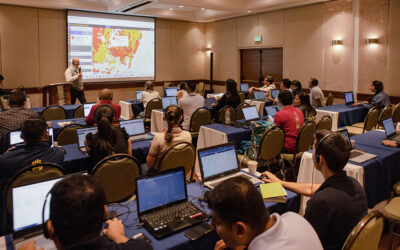
Indonesia’s national government, the ASEAN Coordinating Centre for Humanitarian Assistance on disaster management (AHA Centre), and Pacific Disaster Center (PDC) recently celebrated the completion of two life-saving technology projects. More than 70 stakeholders representing multiple ASEAN member states (AMS) and numerous national and international organizations attended the virtual InAWARE and Disaster Monitoring and Response System […]
Indonesia’s national government, the ASEAN Coordinating Centre for Humanitarian Assistance on disaster management (AHA Centre), and Pacific Disaster Center (PDC) recently celebrated the completion of two life-saving technology projects. More than 70 stakeholders representing multiple ASEAN member states (AMS) and numerous national and international organizations attended the virtual InAWARE and Disaster Monitoring and Response System (DMRS) handover ceremony—marking the beginning of a new era of disaster management capacity throughout the ASEAN region.
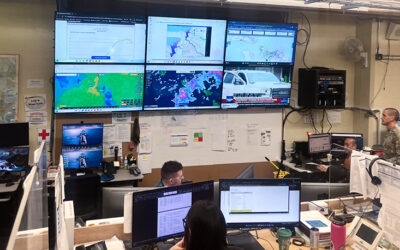
Developed in partnership with funding support from USAID and its Bureau for Humanitarian Assistance, the technologies known as InAWARE and DMRS have been customized for the specific needs of Indonesia’s National Disaster Management Organization (NDMO) Badan Nasional Penanggulangan Bencana (BNPB) and the regional AHA Centre, respectively. Both systems support hazard monitoring, disaster response, regional cooperation, and early warning.
“It’s been a privilege for the AHA Centre to work with Pacific Disaster Center under the ASEAN–U.S. cooperation since our birth, nine years ago. DMRS is powered by PDC’s DisasterAWARE technology and has been internalized and mainstreamed for the past nine years into our day-to-day disaster monitoring and response operation,” said AHA Centre Executive Director Adelina Kamal. “It has allowed us to perform our key function as the operational coordination engine for the ASEAN Agreement on Disaster Management and Emergency Response,” Kamal explained.
The head of BNPB’s Emergency Operations Center Bambang Surya Putra dovetailed with Kamal’s remarks saying the partnership with the AHA Centre and PDC has been key for their operations. “We have been able to use InAWARE for our COVID-19 response, improving the quality of our operations, linking field and manager level, and helping up provide good information to the public.” He said that InAWARE is the richest information source Indonesia has and, “we must continue to work side by side with our partners to further enhance the use of InAWARE within BNPB and BPBDs.”
The vital importance of partnership and cooperation for effective disaster risk reduction was brought to light during the handover ceremony with the attendance of numerous project partners. These included Indonesia’s provincial disaster management agencies (BPBDs), Indonesian government ministries, AMS NDMOs, Humanitarian OpenStreetMap (HOT), Yayasan Peta Bencana (YPB), the World Bank, and others. Since their initial deployments, both the InAWARE and DMRS systems have undergone significant upgrades through these partnerships, including the integration of crowdsourcing disaster data from YPB and critical lifeline data from HOT into InAWARE. Major modifications were also completed to extend use of DMRS to other AMS through language and data customizations.
PDC’s Deputy Executive Director Chris Chiesa highlighted the successes and outcomes of the InAWARE and DMRS projects, including:
Deployment and customization of InAWARE and upgrade of DMRS in line with PDC’s DisasterAWARE®;
Training of more than 1200 BNPB and BPBD staff in the use of InAWARE and 18 AHA Centre Executive (ACE) Program participants from across ASEAN in the use of DMRS;
Cultivation of a cadre of 62 BNPB and BPBD InAWARE trainers;
The development of DMRS and InAWARE eLearning platforms;
Integration of regional, national, and subnational data from authoritative sources into both InAWARE and DMRS; and
Synchronization of hazard data between DMRS and InAWARE.
According to Chiesa, although both projects with PDC are drawing to a close, the relationships with its partners are stronger than ever and will persist well into the future. Chiesa’s sentiments were echoed by PDC’s Executive Director Ray Shirkhodai who stated, “it’s a privilege to have had the opportunity to work with so many of the people joining us today. We see these relationships, developed over many years, as lasting partnerships and we look forward to continued engagement with you all.”
Closing the event, USAID Bureau of Humanitarian Affairs Regional Advisor Harlan Hale further highlighted the importance of the partnerships developed during the projects. “Thinking about where we’ve all started together and where we are today, I wanted to speak to the power of partnership. The partnership between USAID, BNPB, AHA Centre, PDC, and all the partners including HOT, and Yayasan Peta Bencana, it’s remarkable to look and see what organizations with a common purpose, a common objective can do together, blending together their comparative advantages from government, nongovernment, education, and academia.”
The event also paid tribute to two BNPB staff (Sutopo Purwo Nugroho and Bernardus Wisnu Widjaja) who sadly passed away during the course of the InAWARE project. Both were instrumental in the inception and implementation of InAWARE activities and are dearly missed.
ABOUT PDC
Pacific Disaster Center (PDC) is a leading scientific innovator of global risk reduction science and technology. As a University of Hawai’i applied science and research center, our work intersects with a variety of government, community, academic, and scientific organizations at home and around the world to build resilience to natural and man-made hazards—enhancing the capacity to quickly and accurately anticipate and prepare for new and emerging threats. Our innovations in multi-hazard early warning systems, predictive analytics, data science, and machine learning provide decision-makers with the powerful tools and insights they need to navigate today’s complex and interconnected risk landscape.
With more than 6.5 million fans from over 100 countries converging on cities across the United States, Mexico, and Canada for the 2026 FIFA World Cup, the public health stakes are significant. The team is leveraging DisasterAWARE for timely, integrated situational awareness…
NOAA forecasters are sounding the alarm: super El Niño is coming and it could mean record impacts during hurricane season—especially across the Eastern and Central Pacific basins…
In recent years, “wildfire weather” has emerged as a critical concept in disaster management. Catastrophes like the Lahaina wildfire in Hawai‘i, the California Palisades fire, and Canada’s wildfire disaster of 2023, illustrate the need for a fundamental shift in preparedness and planning…
The Pacific Disaster Center (PDC) is advancing its Building Disaster Early Warning Capacity project in Cali, Colombia, through recent completion of an in-person DisasterAWARE training and a dedicated Training of Trainers (ToT) program…
A rare and compounding series of storms struck the Hawaiian islands in rapid succession during the weeks of March 9-22, as two powerful “Kona low” low-pressure systems inundated the state with historic levels of rainfall and powerful winds. The dangerous and uncommon meteorological event…
New agreement focuses on regional risk reduction and resilience building capacity among Pacific Island nations by establishing a framework for expanded regional collaboration and coordination into a structured, long-term partnership designed to support risk-informed decision-making before, during, and after disasters.