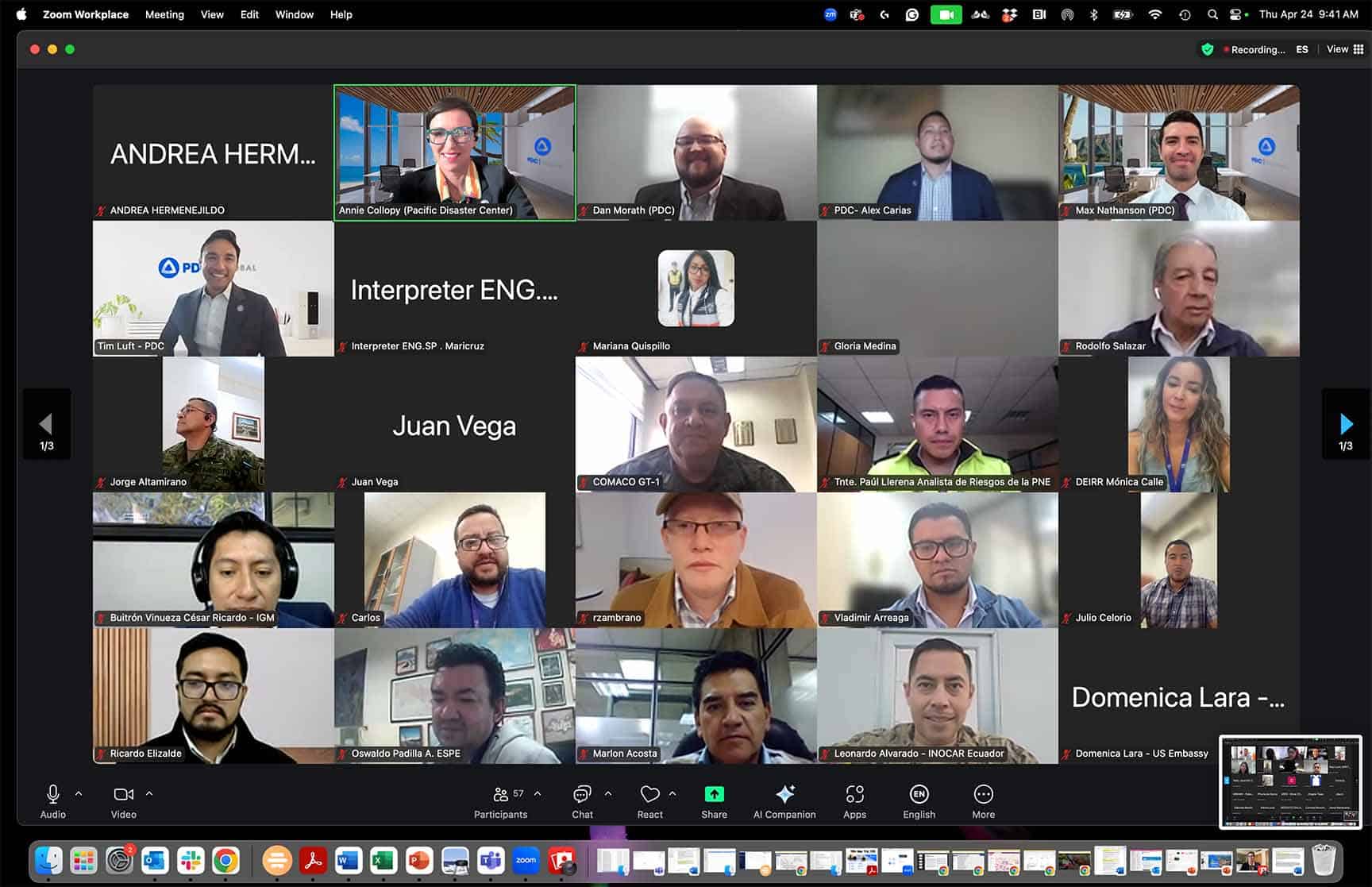
“It is an honor to be working with Ecuador to tackle the very serious and difficult challenges it, and many others in the region, are facing from extreme disaster impacts. From recent severe weather, flooding, landslides, earthquakes, and man-made disasters, these events have the potential to inflict prolonged suffering, economic setbacks, and destabilization that can have lasting effects. Ecuador is the 34th country we’ve partnered with to help assess and identify the most significant drivers of disaster risk and national disaster management capacities. Together, through the important information we gain from the assessment and this partnership, decision makers will be better equipped to align disaster risk reduction and capacity development strategies to achieve greater loss-reduction outcomes and save more lives,” said Luft.
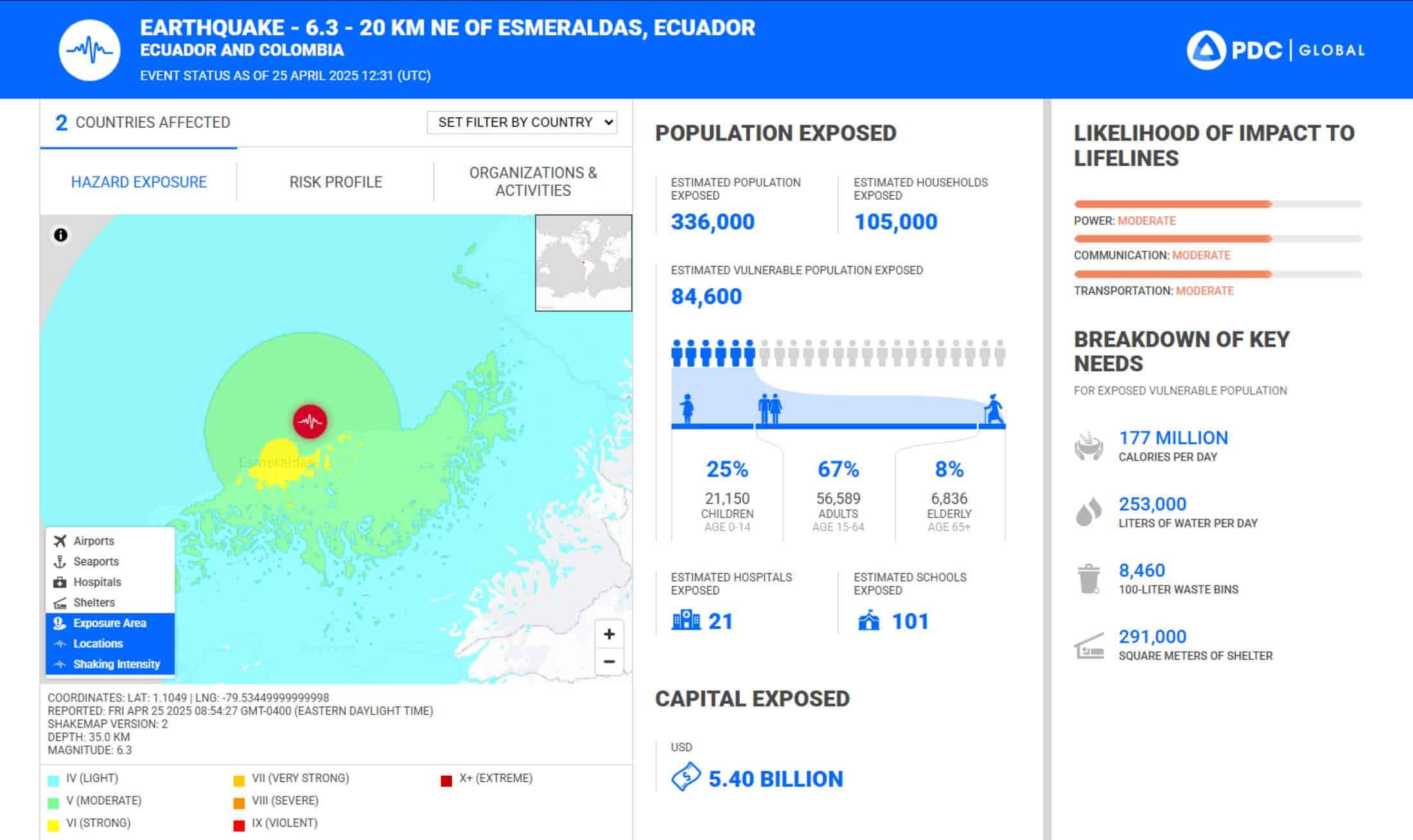
Luft also emphasized the unique access stakeholders of the assessment gain to the Center’s cutting-edge DisasterAWARE platform. Through DisasterAWARE, all of the data from the assessment is integrated, visualized, and provided back to decision makers at no cost for use in disaster management planning, preparedness, response, and recovery. The platform utilizes results of the assessment to provide enhanced multi-hazard early warning information and automated Event Brief analytics within minutes to decision makers—offering the most reliable, scientific information to help anticipate the likely impacts of hazards as soon as they’re reported.
In addition to the new baseline risk and disaster management capacity assessment with PDC, Ecuador recently adopted a national policy, the Organic Law for Comprehensive Disaster Risk Management in 2024, mandating long-term planning, decentralized governance, and enhanced early warning systems. PDC hopes to support Ecuador’s commitment to long-term risk reduction and its national new policy by providing the necessary tools, scientific risk assessment data, and enhanced early warning capabilities to help reduce disaster risks throughout the nation.