Multi-hazard Urban Risk Assessment for Marikina City, Philippines
Urban development in hazard-prone areas is a risky investment. Multi-hazard risk assessment can help inform planning processes and decisions, resulting in better investments.
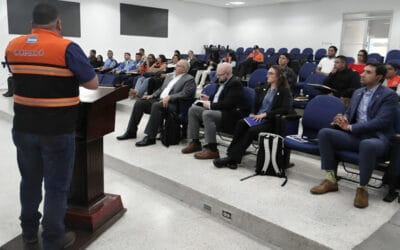
To improve disaster management and encourage sustainable development initiatives for Marikina City in the Philippines, PDC assisted in conducting a multi-hazard urban risk assessment. Working with the Marikina City mayor, city officials, and regional stakeholders, PDC helped identify and map areas most susceptible to flood and earthquake hazards and developed a system for reporting results called the Marikina City Internet Map Viewer. PDC also partnered with Kobe University’s Earthquake Disaster Mitigation Research Center to conduct community-based planning workshops and training sessions, resulting in the Marikina City Safety Program, which outlines strategies for short- and long-term disaster reduction. The success of these efforts was acknowledged at the 2005 World Conference on Disaster Reduction in Kobe, Japan.
ABOUT PDC
Pacific Disaster Center (PDC Global) is a leading scientific innovator in disaster risk reduction science and technology. As a University of Hawai’i applied science and research center, our work intersects with government, community, academic, and scientific organizations at home and around the world to build resilience to natural and man-made hazards. We enable communities to confront disasters more effectively by enhancing the capacity to rapidly anticipate and prepare for new and emerging threats using our AI-powered multi-hazard early warning technology, DisasterAWARE, predictive analytics, data science, and machine learning. For more than 30 years, PDC innovations have equipped decision-makers with the powerful tools and insights they need to navigate today’s complex and interconnected risk landscape.
PDC received prestigious recognition from the United Nations for its international impact in 2022, being granted the once-in-a-lifetime U.N. Sasakawa Award for Disaster Risk Reduction.