

Current Snapshot
For all the latest updates visit: DisasterAWARE
GOES18-TPW-13-900×540
narelle
27P_271200sair
himawari9_ir_27P_202603271430_lat-25.4-lon114.2
27P_tracks_latest
By PDC’s Senior Weather
Specialist Glenn James

The Pacific Disaster Center’s (PDC Global) Friday, March 27, 2026, Tropical Cyclone Activity Report…for the Pacific Ocean, the Indian Ocean, and adjacent Seas
Current Tropical Cyclones:
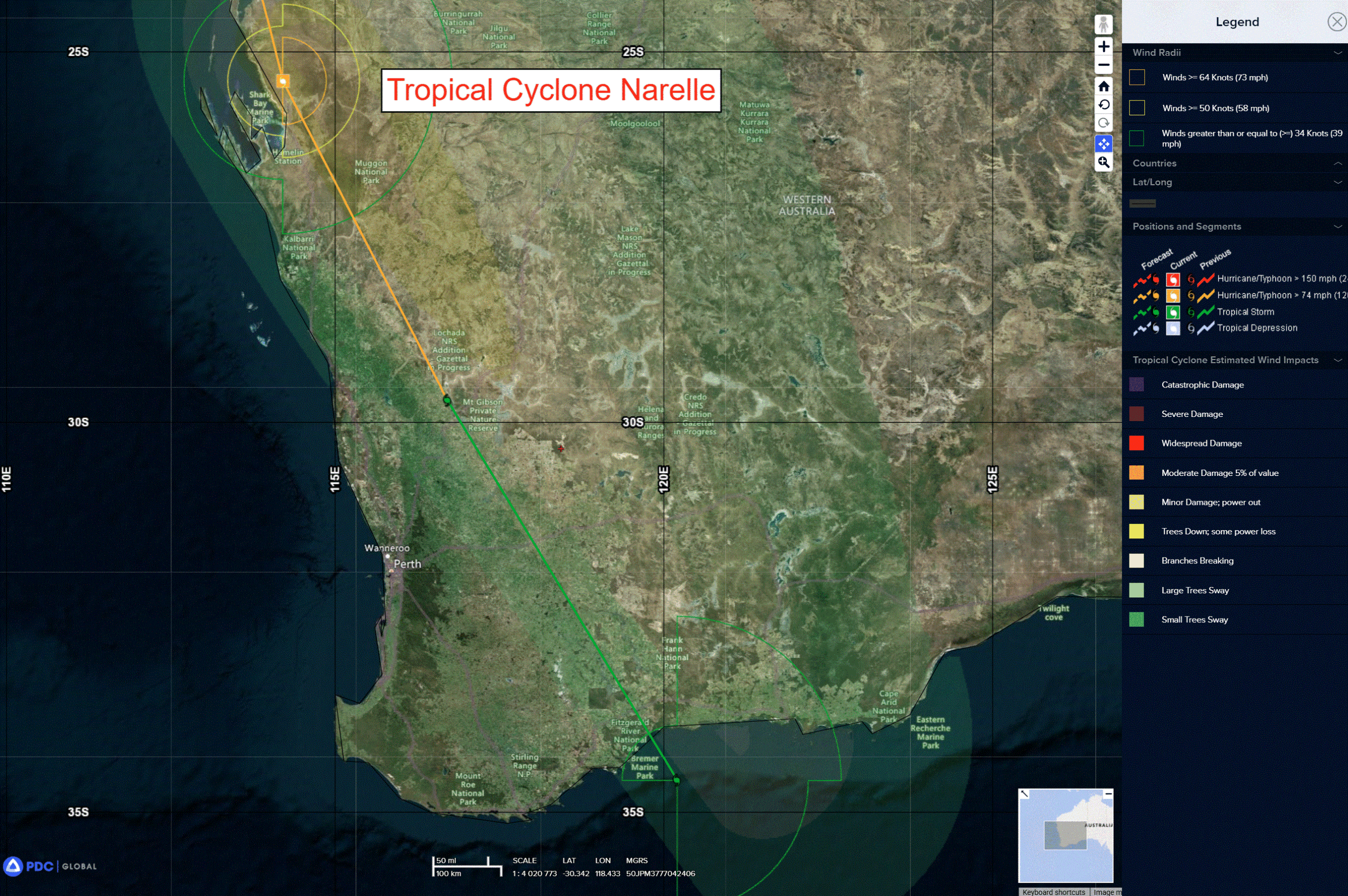
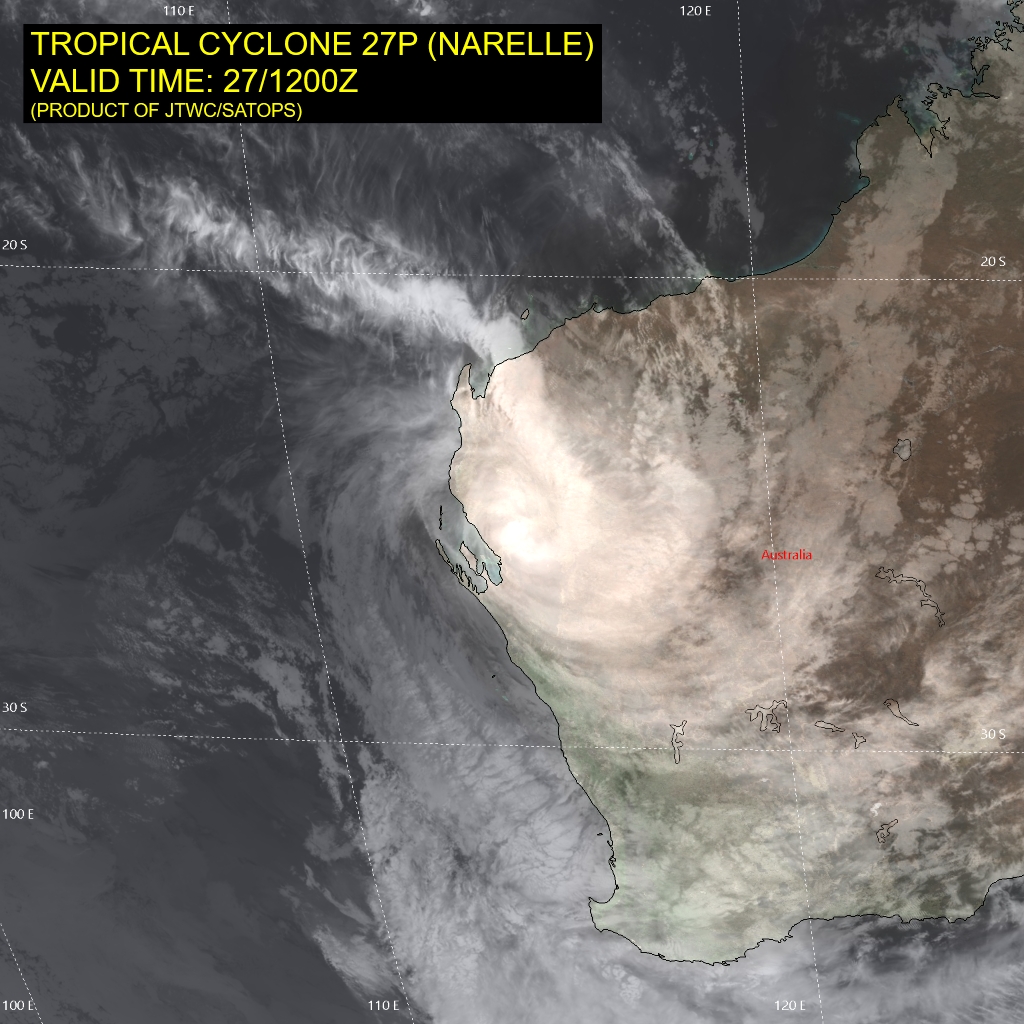
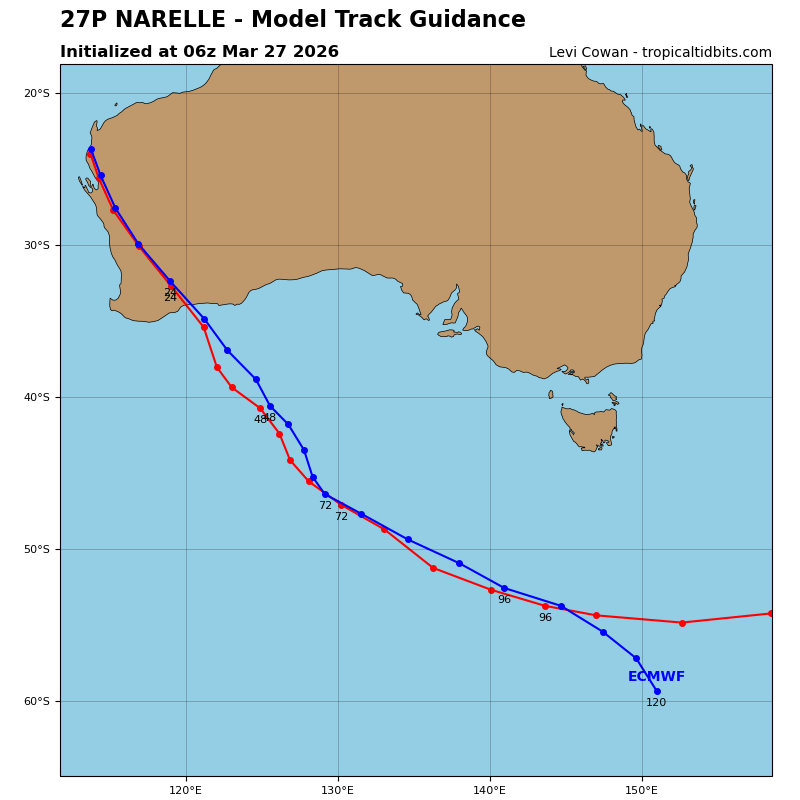
Tropical Cyclone 27P (Narelle)…is located approximately 491 NM south-southeast of Learmonth, Australia – Final Warning
Northeast Pacific Ocean: There are no Tropical Cyclones
The last regularly scheduled Tropical Cyclone Activity Report of the 2025 eastern North Pacific Hurricane Season has been issued. Routine issuance of this section of the PDC product will resume on May 15, 2026. During the off-season, Special Tropical Weather Outlooks will be issued as conditions warrant by the NHC.
Central Pacific Ocean: There are no Tropical Cyclones
The 2025 central North Pacific hurricane season has ended. As such, the final routine Tropical Cyclone Activity Report for the 2025 season has been issued. Routine issuance of this section of the PDC product will resume on June 1, 2026. During the off-season, Special Tropical Weather Outlooks will be issued as conditions warrant by the CPHC.
Western Pacific, Indian Ocean, and adjacent Seas:
South Indian Ocean
Tropical Cyclone 27P (Narelle) – Final Warning
According to the JTWC warning number 41, the sustained winds were 35 knots with gusts to near 45 knots
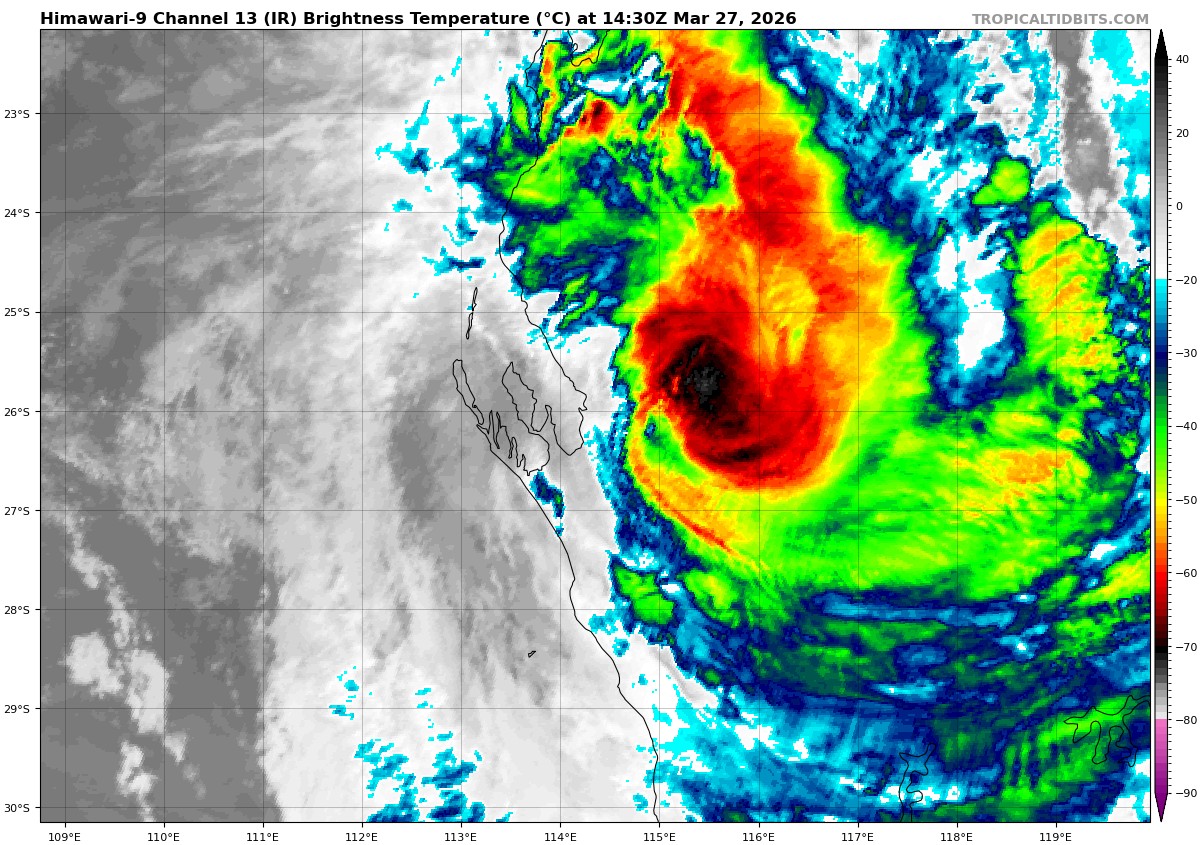
Tropical cyclone 27P (Narelle) has continued to rapidly deteriorate, losing tropical characteristics as evidenced by its sheared convection southeastward, shallow vortex, and weak presentation, depicted by animated multi-spectral imagery (msi).
The system will now track southeastward around the southern portion of the deep-layer anticyclone centered over northwestern Australia. The track will push the remainder of 27P eastward until 12 hours, with growing influence from mid-latitude westerly flow.
The currently assessed subtropical transition will be complete by 12 hours, as what remains of the llcc ejects into the southern ocean. A highly unfavorable environment for continued development of 27P exists in the southern ocean, characterized by cool sea surface temperatures, high vertical wind shear, and dry air.