

Current Snapshot
For all the latest updates visit: DisasterAWARE
2
77
ec
goes18_ir_93E_202606142035_lat8.1-lon-132.0

93E_tracks_latest
10
By PDC’s Senior Weather
Specialist Glenn James

The Pacific Disaster Center’s (PDC Global) Sunday, June 14, 2026, Tropical Cyclone Activity Report…for the Pacific Ocean, the Indian Ocean, and adjacent Seas
Current Tropical Cyclones:
There are no Tropical Cyclones
Northeast Pacific Ocean: There are no Tropical Cyclones
Well Southwest of the Baja California Peninsula:
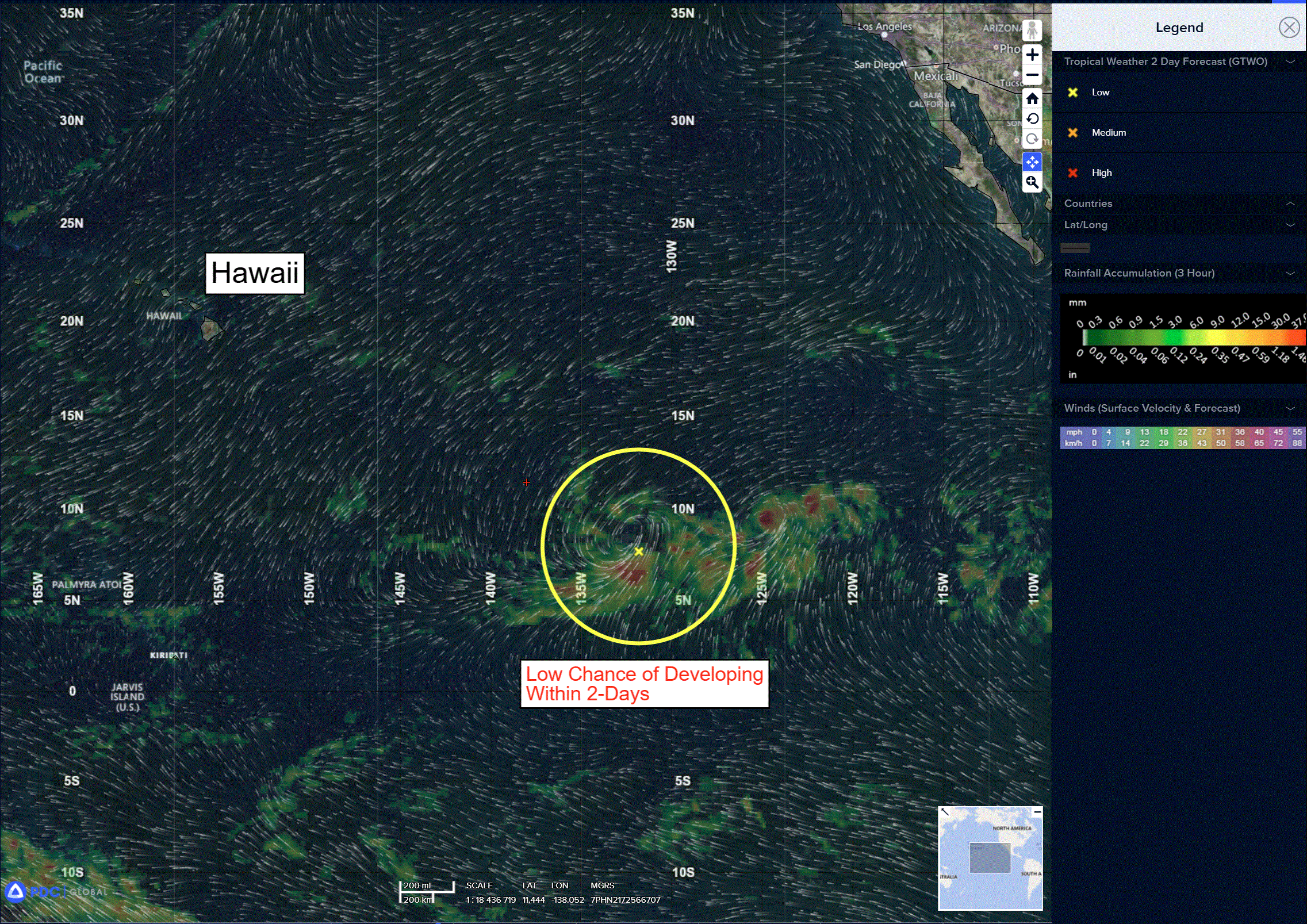
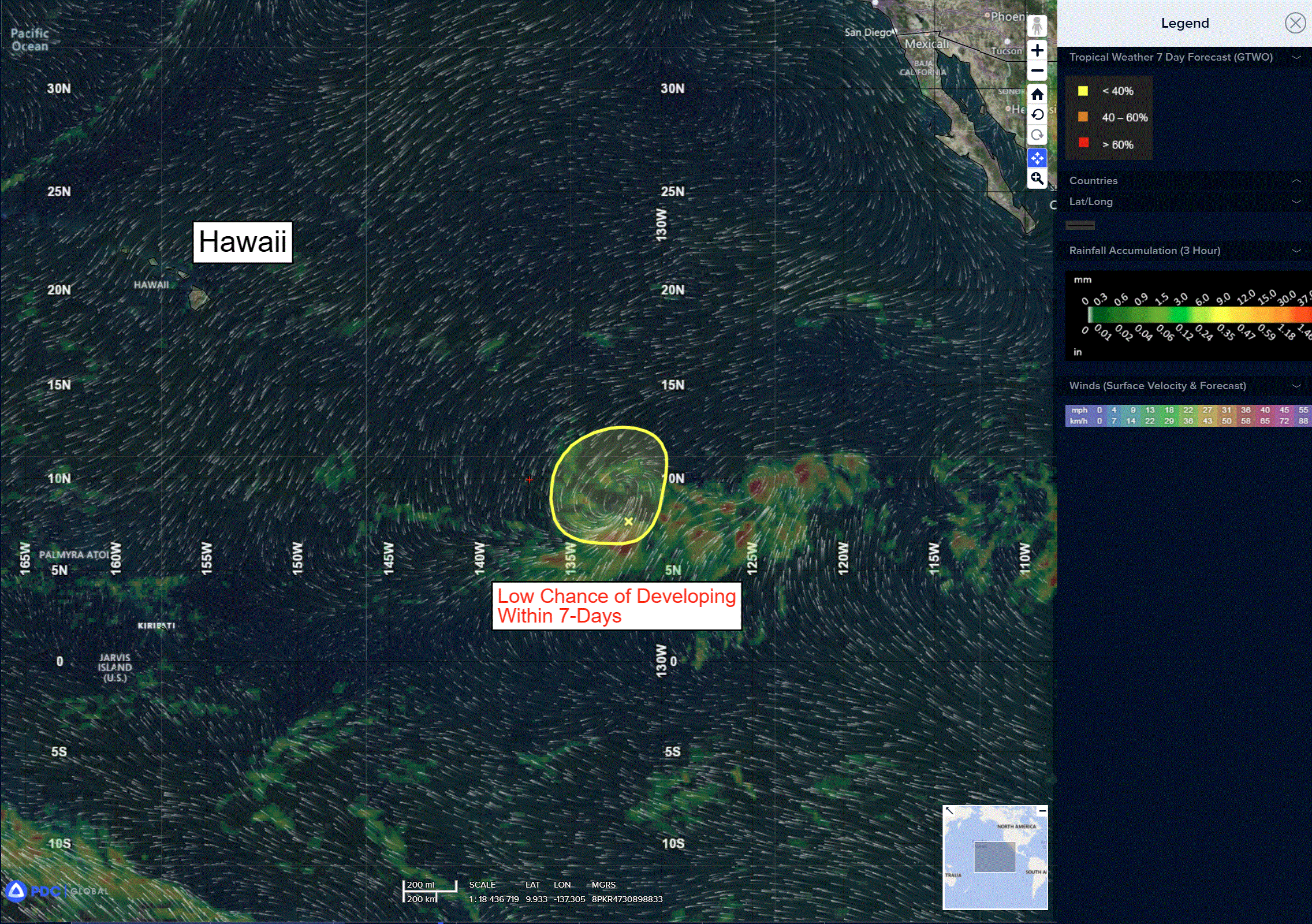
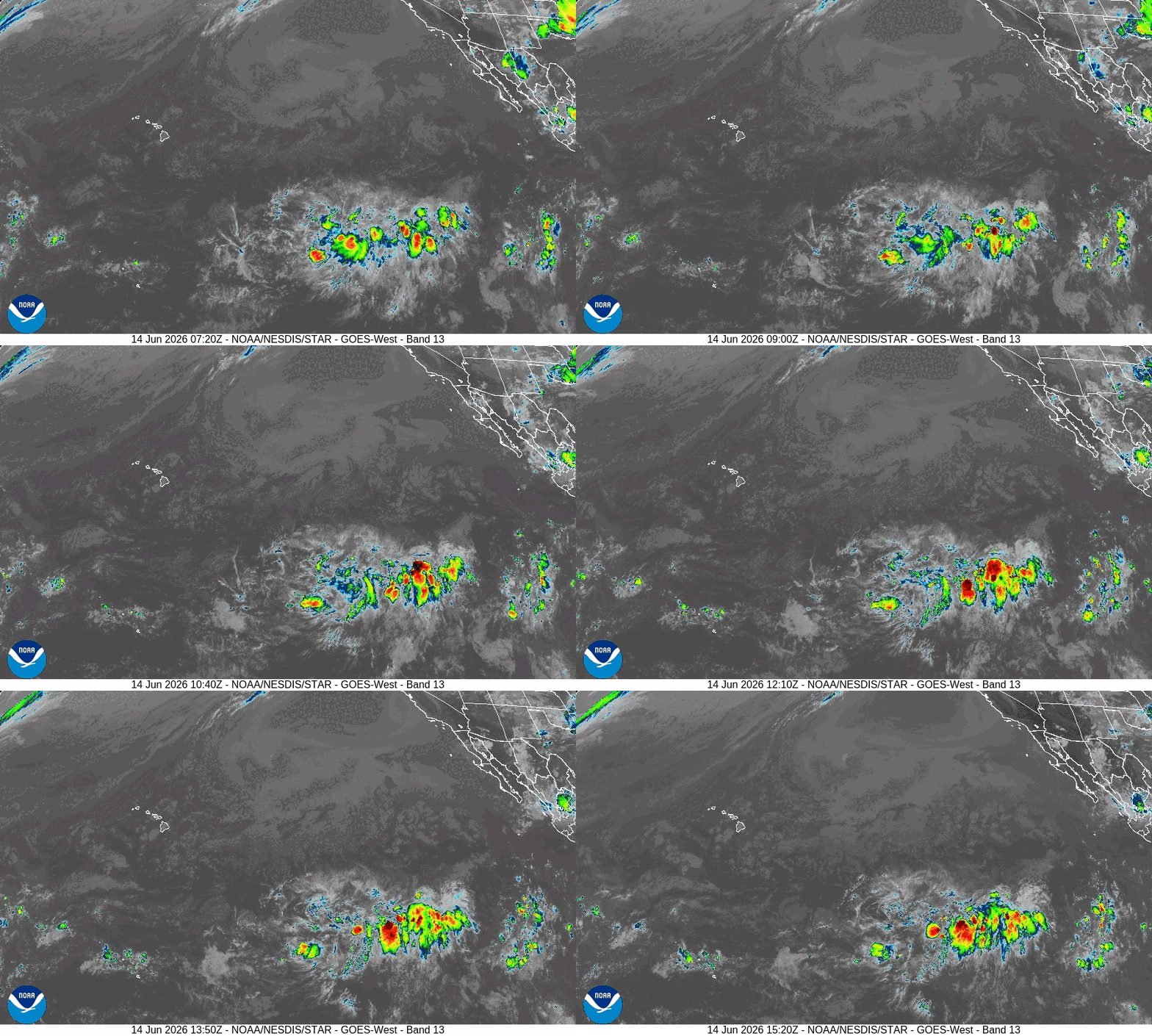
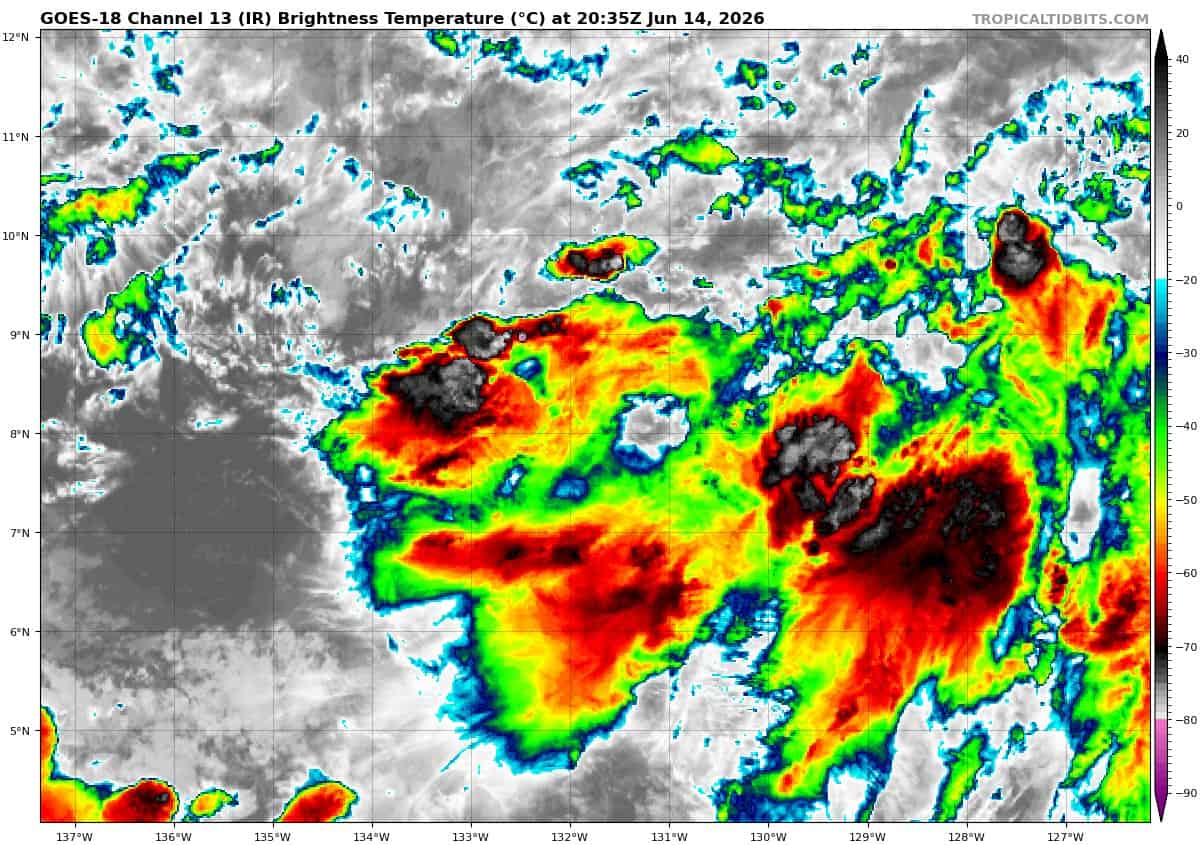
Invest 93E
An area of low pressure located well southwest of the Baja California Peninsula is producing showers and thunderstorms.
Environmental conditions could support some gradual development during the next couple of days while the system moves east-northeastward to northeastward at 5 to 10 mph. By mid-week, dry air is expected to limit further development.
* Formation chance through 48 hours…low…30 percent
* Formation chance through 7 days…low…30 percent
Central Pacific Ocean: There are no Tropical Cyclones
Tropical cyclone formation is not expected during the next 7 days.
Western Pacific, Indian Ocean, and adjacent Seas: There are no Tropical Cyclones
Western Pacific
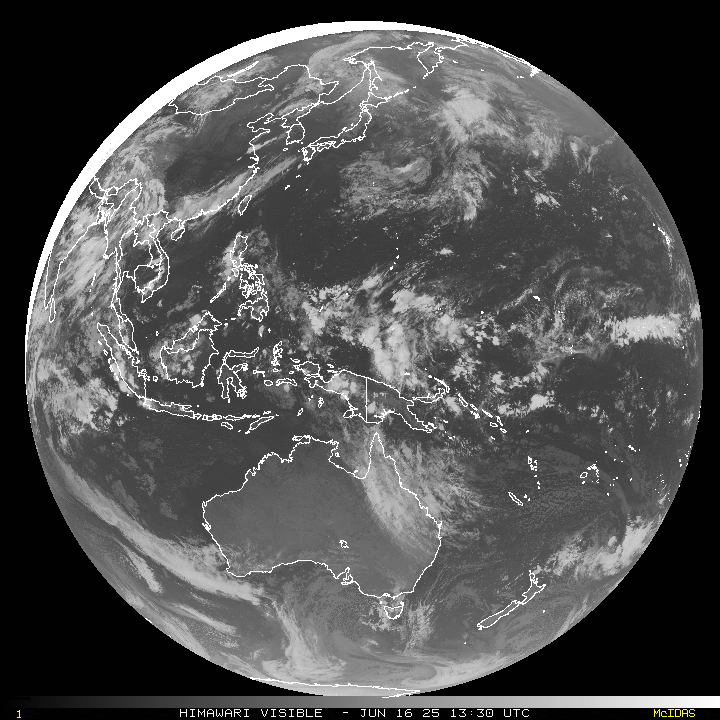
>>> There’s an area of disturbed weather being referred to as Invest 92W, which is located approximately 940 NM east of Guam
Animated multi-spectral satellite imagery (msi) depicts 92W as a tropical wave, with disorganized convective bursts.
Environmental analysis reveals a marginally favorable environment for development with moderate poleward outflow aloft, low vertical wind shear (10-15 kts), and warm sea surface temperatures (29-30 c) offset by slight dry air entrainment from the west.
Deterministic and ensemble models largely show slow development within the next 24-48 hours with a west-northwestward track.
Maximum sustained surface winds are estimated at 18 to 23 knots.
The potential for the development of a significant tropical cyclone within the next 24 hours remains low.
Southwestern Pacific
>>> There’s a second area of disturbed weather being referred to as Invest 96P, which is located approximately 362 NM west-northwest of Nadi, Fiji
Animated multi-spectral satellite imagery (msi) depicts an elongated, mostly exposed low-level circulation center (llcc) with a large band of deep convection situated along the eastern periphery of the system. Earlier ascat data revealed an asymmetric wind field with the strongest winds located within the southwestern quadrant.
Environmental analysis indicates unfavorable characteristics for tropical development with strong poleward outflow and warm (27-28 c) sea surface temperatures greatly offset by very high (40-50 kts) westerly vertical wind shear and significant dry air entrainment.
Numerical model guidance agrees on a southeastward track, south of Fiji over the next 24 hours. 96P is expected to become further embedded within the strong mid-latitude westerlies and transition into an extratropical cyclone as an incoming upper-level trough envelops the system.
Maximum sustained surface winds are estimated at 33 to 38 knots.
The potential for the development of a significant tropical cyclone within the next 24 hours remains low.