PhilAWARE proves indispensable to responders in the face of unrelenting disasters in the Philippines

From crippling floods to powerful earthquakes and back-to-back typhoons, the Philippines hazard environment grew more complex by the month during 2025—and its Office of Civil Defense (OCD) charged with responding, leaned heavily on the system it had institutionalized just a year earlier.

By Victoria Leat, Chani Goering

12/04/2025
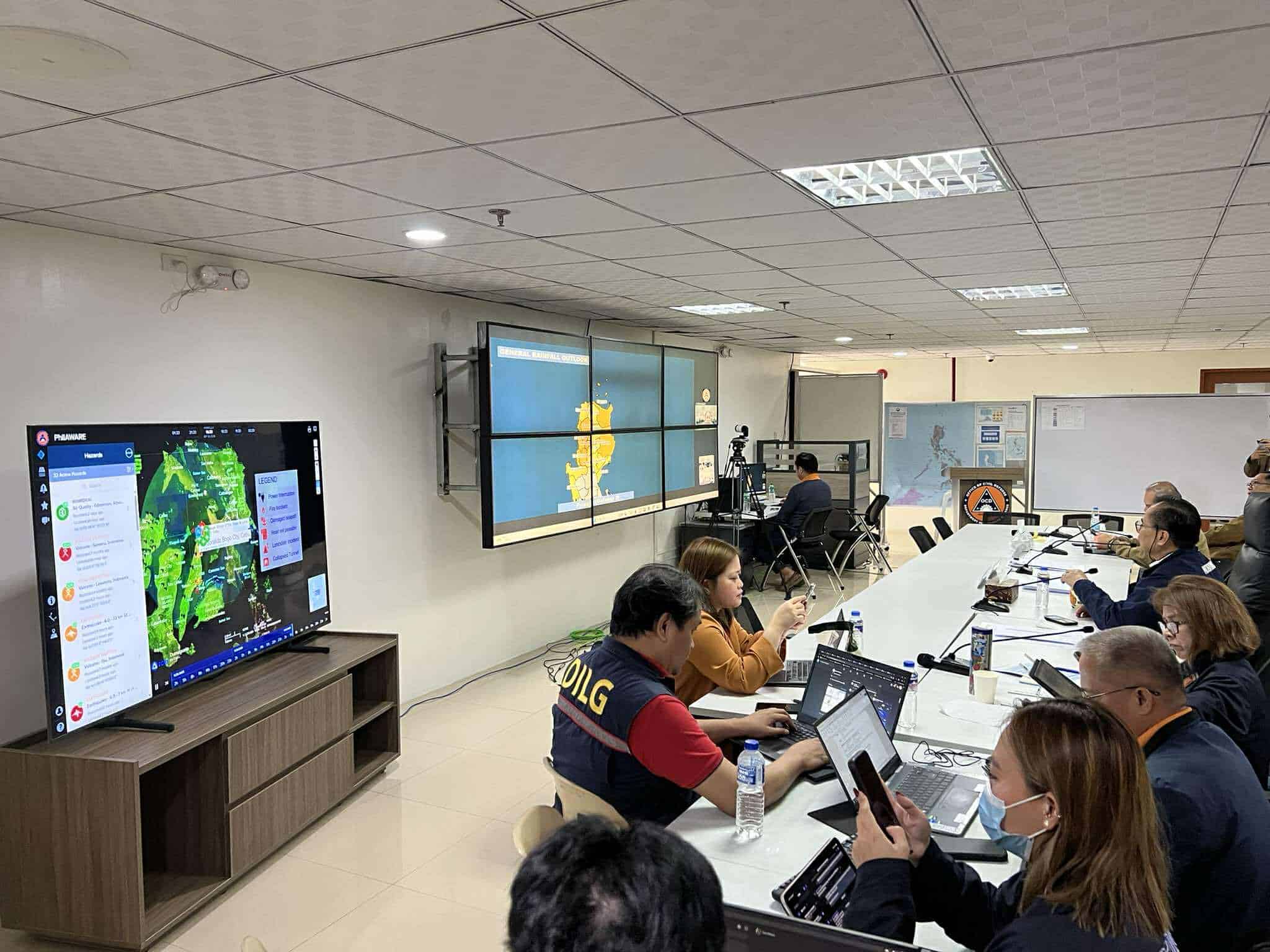
Following a powerful 7.4 magnitude earthquake that struck the Davao region of the Philippines, officials us PhilAWARE to analyze the potential impacts of a strong aftershock registered at M6.7.
Photograph by Office of Civil Defense, Philippines
From crippling floods to powerful earthquakes and back-to-back typhoons, the Philippines’ hazard environment grew more complex by the month during 2025—and its Office of Civil Defense (OCD) charged with responding, leaned heavily on the system it had institutionalized just a year earlier.

Since the completion of the PhilAWARE project in partnership with Pacific Disaster Center (PDC) in 2024, the Philippines continues to rely on the platform to monitor, assess, and respond to the nation’s escalating risks. That reliance was put to the test in 2025, a year marked by Tropical Storm Wipha (Crising), severe flooding across Metro Manila, destructive magnitude 6.9 and 7.4 earthquakes in Cebu and Davao, and powerful cyclones including Super Typhoon Nando and Typhoon Fung-wong. Each event stressed response capabilities—and each time, PhilAWARE helped deliver the timely, integrated situational awareness needed to protect communities.

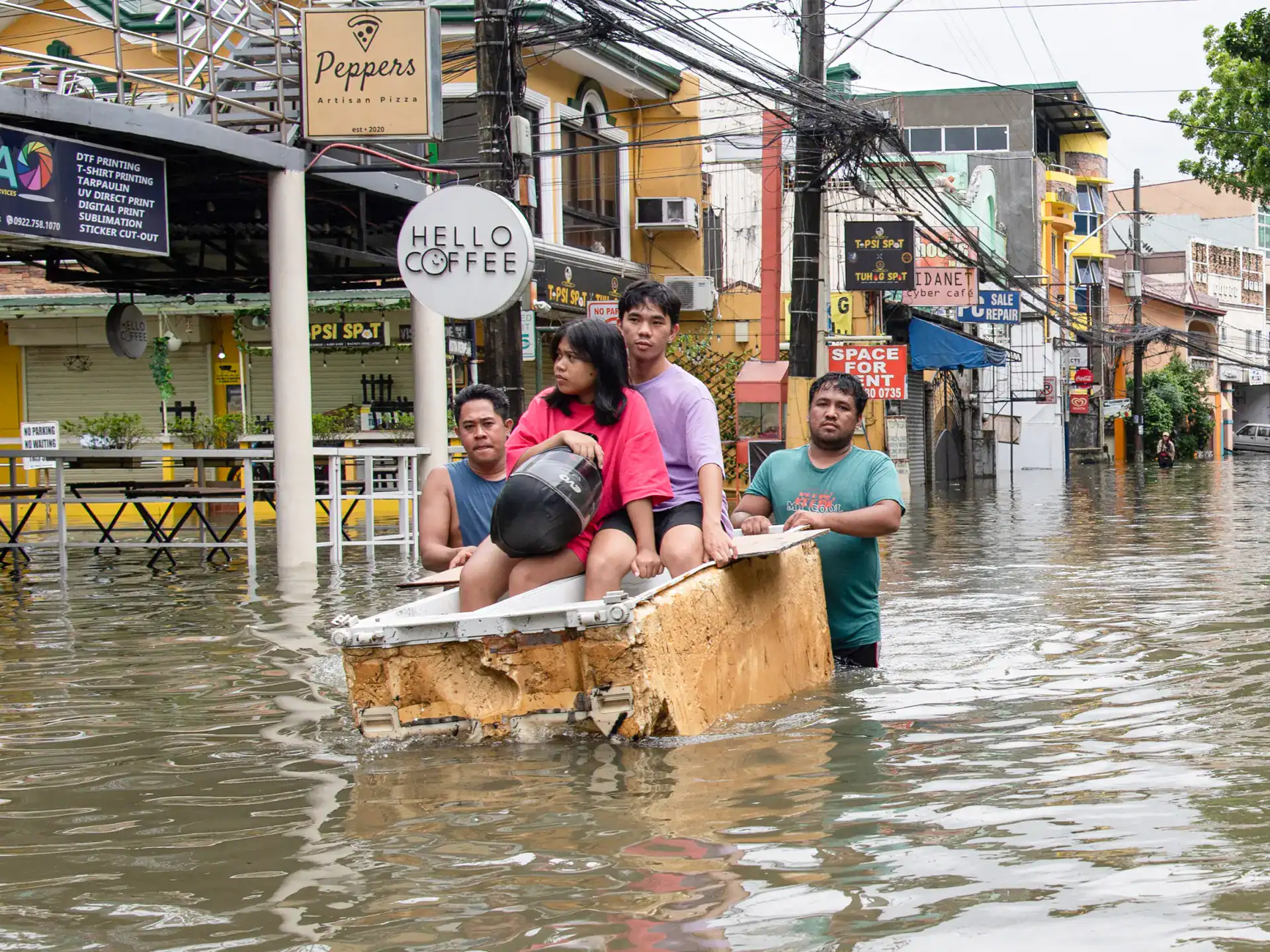
Tropical Storm Wipha inundates the Philippines, displacing thousands.
Photograph by Aljazeera
During Tropical Storm Wipha (Crising), the system became a critical node for operations. “With significant amounts of information being received from the field regarding the storm impacts, we were able to plot reported flood heights and effectively brief leadership on the current situation to support their decision making,” said Director III, Operations Service, Ms. Maria Palacio. “PhilAWARE provides us with a much clearer picture of the on-the-ground situation, which is vital for fast and effective response.”

“PhilAWARE provides us with a much clearer picture of the on-the-ground situation, which is vital for fast and effective response.”

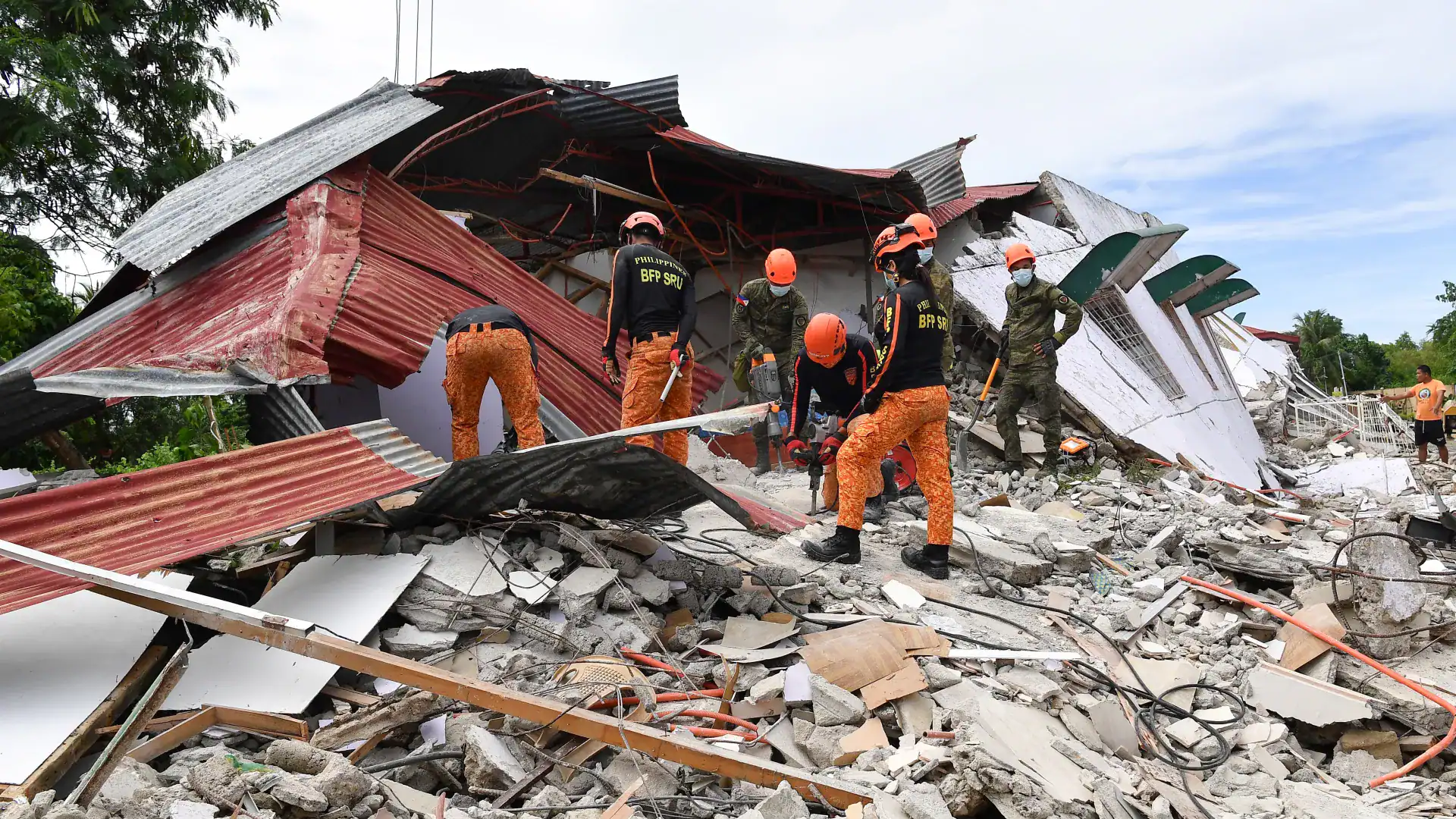
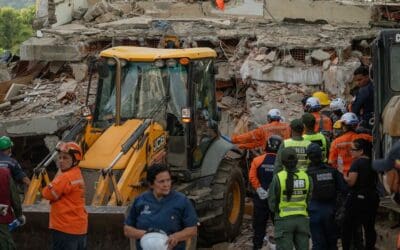
M6.9 earthquake in Cebu, Philippines kills at least 79, injures more than 1,200, and results in over $300M USD in damages.
Photograph by Aljazeera
PhilAWARE again proved its value after the major earthquakes in Cebu and Davao Oriental. OCD used the platform’s Hazard Brief to quickly understand population exposure, infrastructure at risk, and potential cascading hazards—allowing emergency managers to coordinate response operations and deliver precise, data-driven briefings during the critical early hours of response and recovery.
Civil Defense Deputy Administrator, Assistant Secretary Cesar M. Idio
Photograph by Philippines Office of Civil Defense
Across these crises, PhilAWARE’s integration of national forecasts, exposure datasets, field reports, and impact modeling strengthened OCD’s operational picture at both national and regional levels. The enhanced visibility helped emergency managers anticipate needs, allocate resources more efficiently, and issue timely warnings to safeguard vulnerable populations.

Today, PhilAWARE is formally embedded in OCD’s Operations Center (OpCen) Standard Operating Procedures and is recognized as a cornerstone of the country’s disaster preparedness and response framework. Civil Defense Deputy Administrator, Assistant Secretary Cesar M. Idio, underscored its importance, noting that PhilAWARE is now “an integral part of daily operations, allowing us to understand more about hazards in our area of responsibility and helping us to make better decisions, faster.”

Civil Defense Administrator and NDRRM Executive Director, Usec. Harold Caberos, echoed this sentiment, emphasizing OCD’s gratitude for the successful launch, operationalization, and institutionalization of the system. He affirmed that “PhilAWARE represents the effective integration of technology within disaster risk reduction and management,” enabling more efficient, data-driven decisions during emergencies. He added, “The system offers clearer situational awareness and a more comprehensive visualization of hazards and their effects,” reinforcing OCD’s commitment to continuous innovation in disaster management.

“The system offers clearer situational awareness and a more comprehensive visualization of hazards and their effects.”

That commitment is evident in OCD’s sustained investment in PhilAWARE. The agency continues to fund its maintenance, administration, and operational costs, ensuring the platform remains fully available, sustainable, and ready to support emergency operations in one of the world’s most hazard-prone nations. To extend these capabilities nationwide, OCD expanded PhilAWARE’s use across its regional offices throughout 2025, conducting trainings led by its cadre of PhilAWARE trainers to strengthen consistency and coordination across the disaster response system.

Reflecting on the system’s successful institutionalization, Director of Early Warning Solutions at PDC, Mr. Chris Chiesa, noted, “The Philippines’ approach to sustaining PhilAWARE highlights how government institutions can take full ownership of USG investments to ensure long-term impact and protection for vulnerable communities, and build self-reliance.”

“The Philippines’ approach to sustaining PhilAWARE highlights how government institutions can take full ownership of USG investments to ensure long-term impact and protection for vulnerable communities…”

Get quarterly updates about our innovations and projects!
(Email Registration) Quarterly Email Updates
First
Last

ABOUT PDC

Pacific Disaster Center (PDC) is a leading scientific innovator of global risk reduction science and technology. As a University of Hawai’i applied science and research center, our work intersects with a variety of government, community, academic, and scientific organizations at home and around the world to build resilience to natural and man-made hazards—enhancing the capacity to quickly and accurately anticipate and prepare for new and emerging threats. Our innovations in multi-hazard early warning systems, predictive analytics, data science, and machine learning provide decision-makers with the powerful tools and insights they need to navigate today’s complex and interconnected risk landscape.

Related News