U.S. funds major expansion of Philippines’ multi-hazard risk and early warning system days ahead of Typhoon Nalgae’s destruction
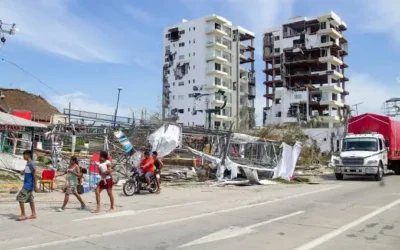
Only days after the U.S. government announced it would fund nearly a million-dollar expansion of the Philippine’s risk intelligence and early warning system, Typhoon Nalgae (locally named Paeng), swept the nation—causing extreme flooding and landslides that have so far claimed the lives of more than 100 people and displaced nearly 200,000. “While the losses from Nalgae […]
Only days after the U.S. government announced it would fund nearly a million-dollar expansion of the Philippine’s risk intelligence and early warning system, Typhoon Nalgae (locally named Paeng), swept the nation—causing extreme flooding and landslides that have so far claimed the lives of more than 100 people and displaced nearly 200,000.
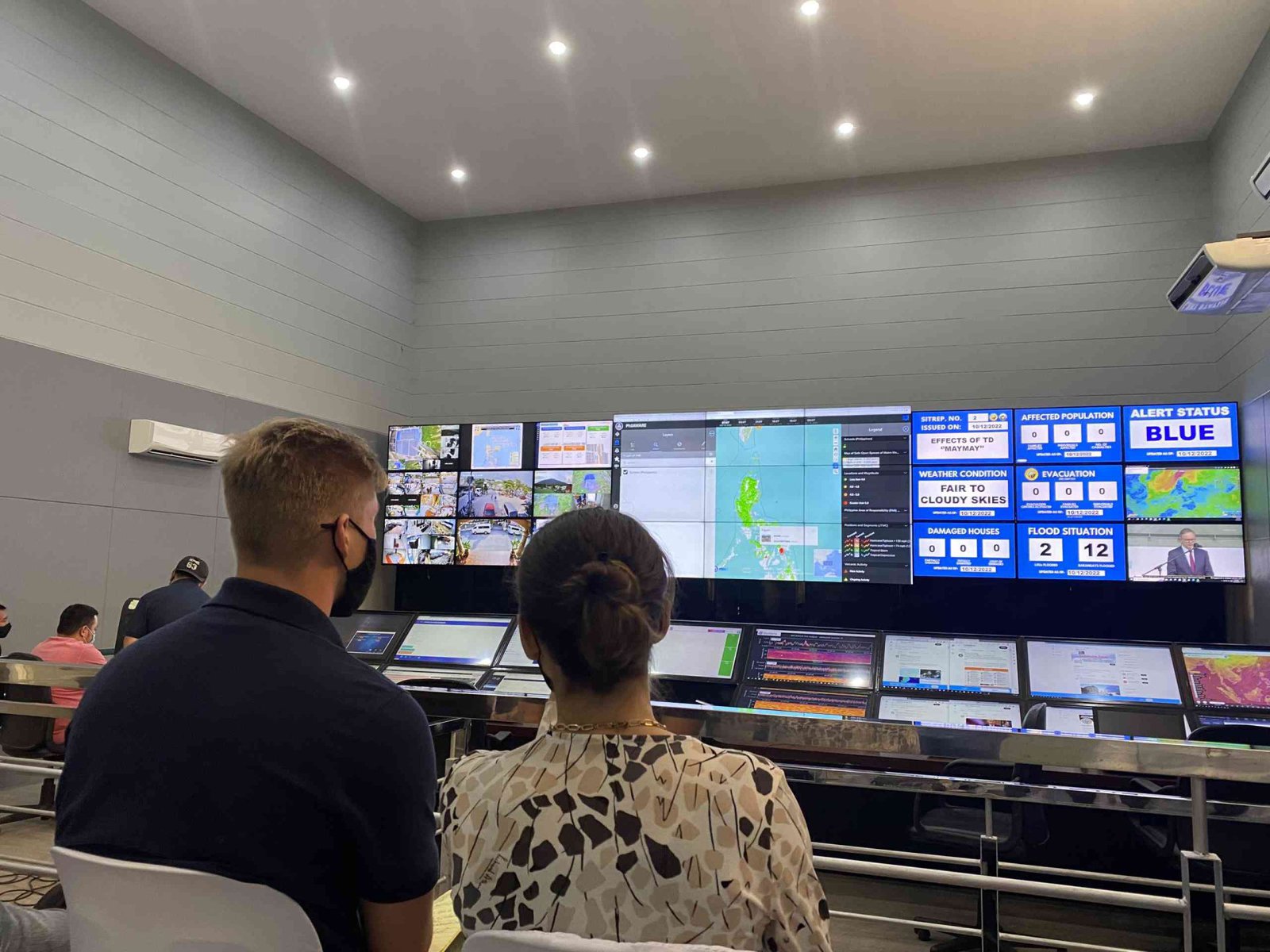
“While the losses from Nalgae are substantial, the impacts could have been even more severe were it not for the newly operationalized PhilAWARE system that we launched in partnership with the Philippines Office of Civil Defense (OCD) in 2021,” said Pacific Disaster Center’s Deputy Executive Director Chris Chiesa.
Chiesa emphasized that PhilAWARE is a solution designed in collaboration with the Philippine’s disaster management community to help decision makers better anticipate disasters and their impacts and effectively prepare for and respond to events like Nalgae.
PDC is a University of Hawai’i applied science and research center which has partnered with USAID’s Bureau of Humanitarian Affairs to help equip vulnerable countries around the world with enhanced disaster risk reduction capabilities using the Center’s DisasterAWARE multi-hazard early warning, modeling, and risk intelligence platform.
“2022 has already presented the Philippines with many natural hazard challenges,” said USAID’s Mission Director, Ryan Washburn. “USAID is proud to collaborate with OCD and PDC on continuation of this project and is grateful for this partnership which highlights USAID’s continuing commitment to support partner nations in disaster risk reduction efforts.”
The PhilAWARE project expansion will build greater regional disaster management capacity and localized use of the PhilAWARE system for disaster planning, response, preparation, and recovery.
“With OCD’s operational use of PhilAWARE, we have already seen the fruits of our labor to protect our citizens from hazards. We are happy to have this enduring partnership with PDC and USAID to continue this vital work at the subnational level,” said OCD Administrator Usec Ferrer. As noted by Ferrer, the PhilAWARE system is operationally used at the nation’s Emergency Operations Center in Manila to prepare and respond to disaster events throughout the country.
The PhilAWARE Phase II expansion project kicked off in Manila on October 11, 2022, highlighting successful Phase I operational use cases by the Philippines’ OCD and detailing the activities to be undertaken in Phase II. Phase II activities will include expanded subnational use and training, data development and integration, and system upgrades.
The PhilAWARE Phase II kickoff workshop was attended by more than 45 participants including representatives from OCD, other National Disaster Risk Reduction and Management Council (NDRRMC) member agencies including the Philippine Atmospheric, Geophysical and Astronomical Services Administration (PAGASA), Phivolcs, Mines and Geosciences Bureau, and Department of Social Welfare and Development, as well as USAID, the United Nations, and private sector representatives from organizations like GeoData, Sandz, and more.
With a full week of activities, the PhilAWARE Phase II kickoff week engagement also included a subnational kickoff in Region III (Central Luzon) on October 13, 2022, followed by system user training session delivered to representatives from Region II’s OCD and NDRRMC to introduce operational use. PhilAWARE Phase II project activities are scheduled to continue through July of 2023.
ABOUT PDC
Pacific Disaster Center (PDC Global) is a leading scientific innovator in disaster risk reduction science and technology. As a University of Hawai’i applied science and research center, our work intersects with government, community, academic, and scientific organizations at home and around the world to build resilience to natural and man-made hazards. We enable communities to confront disasters more effectively by enhancing the capacity to rapidly anticipate and prepare for new and emerging threats using our AI-powered multi-hazard early warning technology, DisasterAWARE, predictive analytics, data science, and machine learning. For more than 30 years, PDC innovations have equipped decision-makers with the powerful tools and insights they need to navigate today’s complex and interconnected risk landscape.
PDC received prestigious recognition from the United Nations for its international impact in 2022, being granted the once-in-a-lifetime U.N. Sasakawa Award for Disaster Risk Reduction.
Pacific Disaster Center (PDC), in partnership with the U.S. Pacific Command (US PACOM), and twenty-nine other nations, international organizations, and interagency partners, supported the humanitarian assistance and disaster response (HADR) component of Rim of the Pacific (RIMPAC) 2026…
As Guam and the Commonwealth of the Northern Mariana Islands (CNMI) braced for impacts from a second super typhoon in less than three months, the Pacific Disaster Center (PDC) joined regional preparedness coordination and relief efforts…
Joining one of the largest-scale relief efforts in history, PDC embedded analysts and its DisasterAWARE technology ecosystem into mission operations to help save lives during response to the event…
The June 8 Mindanao earthquake demonstrated how years of investment in PhilAWARE, training, and operational integration of critical life-saving data enabled immediate situational awareness and coordinated decision-making across the Philippines national disaster response system…
With more than 6.5 million fans from over 100 countries converging on cities across the United States, Mexico, and Canada for the 2026 FIFA World Cup, the public health stakes are significant. The team is leveraging DisasterAWARE for timely, integrated situational awareness…
NOAA forecasters are sounding the alarm: super El Niño is coming and it could mean record impacts during hurricane season—especially across the Eastern and Central Pacific basins…