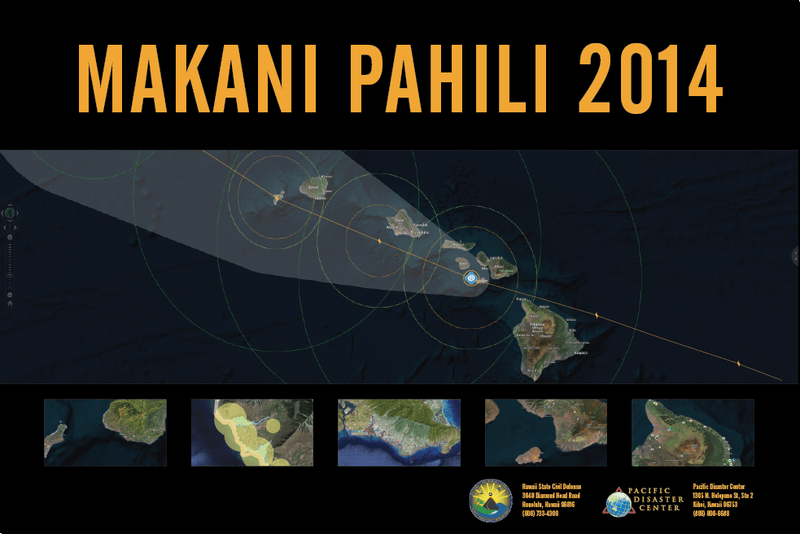
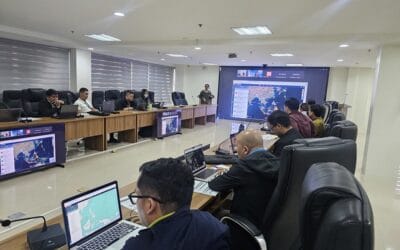
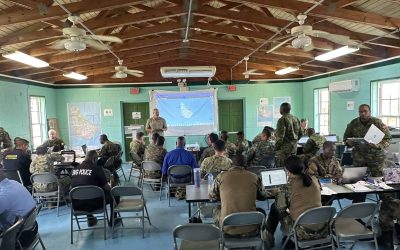
In Hawaii, a statewide hurricane preparedness exercise called Makani Pahili is conducted annually to test and improve disaster readiness for tropical cyclone impacts. By working with a hypothetical scenario of a destructive Category IV hurricane that crosses the entire island chain with wind speeds of 132 mph, participants can engage in exercises designed to allow the State of Hawaii and all four counties, as well as federal, private, and nongovernmental (NGO) stakeholders to practice emergency procedures.
The exercise is organized and coordinated by Hawaii State Civil Defense (HSCD) and begins on June 1, which corresponds to the beginning of the Central Pacific hurricane season. This year, in addition to their coordination with HSCD, each county civil defense agency and the City and County of Honolulu’s Department of Emergency Management (DEM) will be organizing independent tabletop exercises with their partner agencies designed to accommodate each county’s individual needs.
The core competencies being tested and evaluated during this exercise include operational coordination, operational communications, public information and warning, situational assessment, mass care, and critical transportation.
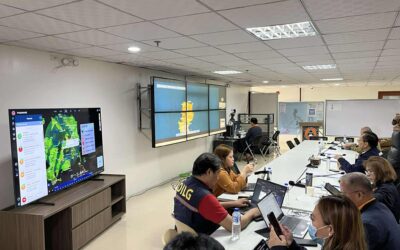
During Makani Pahili, Pacific Disaster Center’s (PDC) newly upgraded early warning and multi-hazard monitoring platform, DisasterAWARE v. 5.0, will be used in state and county emergency operation centers for accessing, updating, and sharing exercise information. Participants will be able to simulate the Category IV hurricane environment via a special EXERCISE Emergency Operations (EMOPS) system.
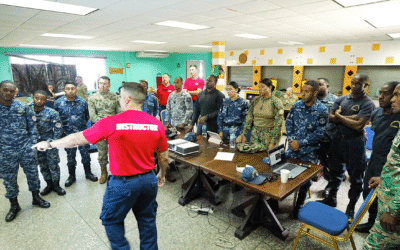
In preparation for the event, PDC has presented numerous DisasterAWARE v. 5.0 user training sessions since April. User training classes have been conducted for Hawaii-based Emergency Managers at the State Emergency Operations Center (SEOC), the Kauai Civil Defense Agency (KCDA), Maui County Civil Defense Agency (MCDA), Hawaii County Civil Defense Agency (HCCDA), and the City and County of Honolulu’s DEM. Various emergency management partners have also taken the training, including FEMA, Honolulu Public Safety, State Department of Transportation, University of Hawai‘i, county fire departments and GIS offices, and various state, county, and nongovernmental entities.
For more information on Makani Pahili:
• Read more about the statewide hurricane exercise,
• Find emergency contact information for Hawaii,
• View an article about last year’s exercise.
ABOUT PDC
Pacific Disaster Center (PDC) is a leading scientific innovator of global risk reduction science and technology. As a University of Hawai’i applied science and research center, our work intersects with a variety of government, community, academic, and scientific organizations at home and around the world to build resilience to natural and man-made hazards—enhancing the capacity to quickly and accurately anticipate and prepare for new and emerging threats. Our innovations in multi-hazard early warning systems, predictive analytics, data science, and machine learning provide decision-makers with the powerful tools and insights they need to navigate today’s complex and interconnected risk landscape.