Emergency Operations (EMOPS) System Supports Balikatan Exercise in the Philippines
As populations increase, more people are exposed to hazards, and large, growing cities face numerous challenges when responding to a disaster. Preparing for these challenges through exercise and simulation is an essential step in acting effectively and efficiently when a real event occurs.
Balikatan is an annual joint exercise of the Republic of the Philippines and the United States aimed at improving civil-military coordination for disaster preparedness. In 2012, the 28th Balikatan Exercise focused on Humanitarian Assistance and Disaster Relief (HA/DR) training and included simulating a catastrophic earthquake and resulting tsunami impacting metropolitan Manila.
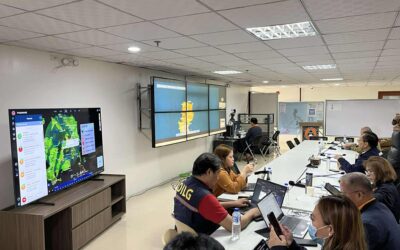
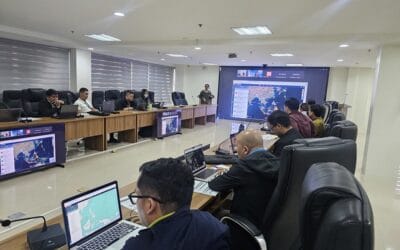
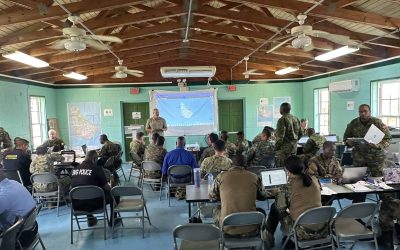
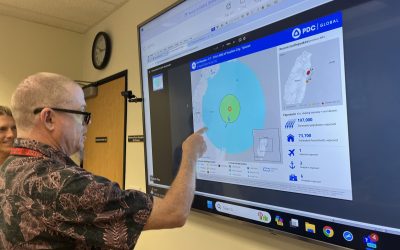
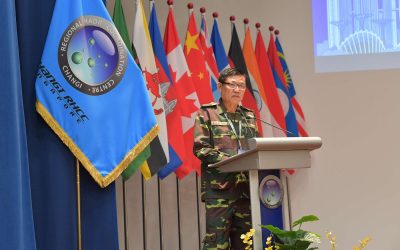
PDC’s DisasterAWARE® decision support system was used as the situational awareness tool during the exercise. Through EMOPS, the professional disaster management version of DisasterAWARE, exercise players displayed the exercise scenario, visualized the location of damage and support units, and shared information. In addition, PDC staff conducted DisasterAWARE training with disaster management agencies and military representatives from the Philippines, the United States, Malaysia, Indonesia, Australia, Thailand, Korea, and Japan. The activities helped reinforce good practices, identify gaps in coordination and national disaster management capabilities, and uncover possible solutions.
ABOUT PDC
Pacific Disaster Center (PDC) is a leading scientific innovator of global risk reduction science and technology. As a University of Hawai’i applied science and research center, our work intersects with a variety of government, community, academic, and scientific organizations at home and around the world to build resilience to natural and man-made hazards—enhancing the capacity to quickly and accurately anticipate and prepare for new and emerging threats. Our innovations in multi-hazard early warning systems, predictive analytics, data science, and machine learning provide decision-makers with the powerful tools and insights they need to navigate today’s complex and interconnected risk landscape.