Public-private partnership continues to plays an increasingly important role in reducing the disaster risks and improving response and recovery efforts. Following successive large-scale disasters in the Philippines, the Philippine Disaster Resilience Foundation (PDRF) was reorganized as an umbrella organization in the private sector for disaster preparedness, relief, and recovery. The Foundation now provides a valuable private-sector vehicle and coordinating body to providing linkage to government agencies, humanitarian institutions, and civil society groups.
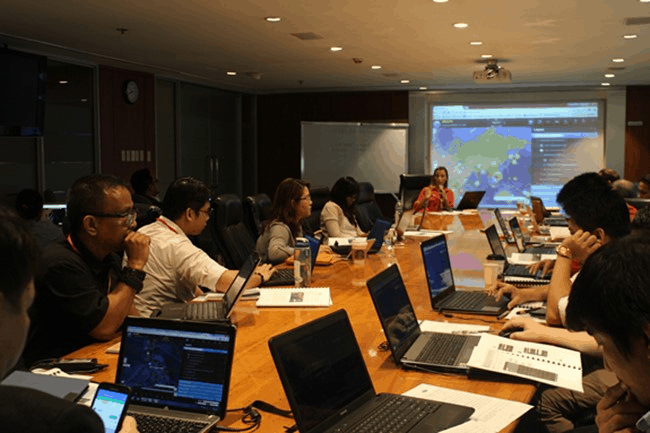
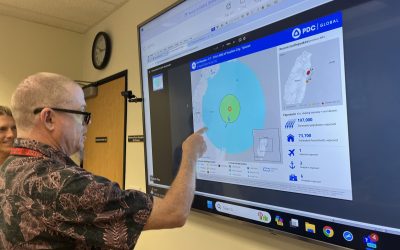
Pacific Disaster Center (PDC) has been engaged with the disaster risk reduction (DRR) community in the Philippines for many years. On March 11, 2016, PDC Southeast Asia Program Advisor Victoria Leat provided user training in Manila on the Emergency Operations (DisasterAWARE/EMOPS) system. This training is part of a new five-year project led by partners from PDRF and the Earthquakes and Megacities Initiative (EMI).
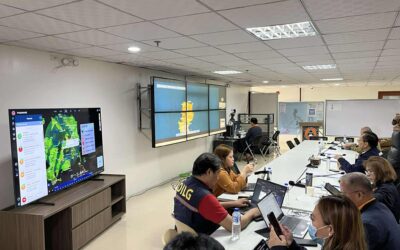
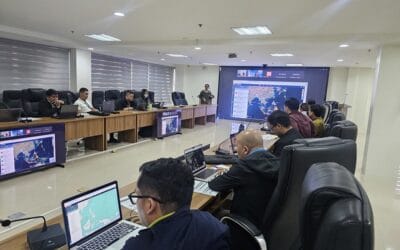
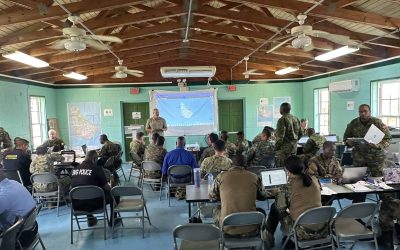
More than 20 people attended the EMOPS training, which was designed to help participants achieve a working mastery of all software functions necessary for hazard and disaster monitoring. They also were exposed to advanced functions that will be used by administrators at a later time and they became familiar with the types of geospatial and non-geospatial data and information available to them.
Following the training, participants were able to demonstrate their newly acquired skills and knowledge through practical exercises.
Project partners are working together to build skills and understanding, becoming better able to quickly access and effectively share valuable information to support coordination and decision-making about hazards monitoring and disaster operations.
For more information:
- Read “Response and Recovery Remain Challenging” (Haiyan)
- Earthquakes and Megacities (EMI)
- Philippine Disaster Resilience Foundation (PDRF)
ABOUT PDC
Pacific Disaster Center (PDC) is a leading scientific innovator of global risk reduction science and technology. As a University of Hawai’i applied science and research center, our work intersects with a variety of government, community, academic, and scientific organizations at home and around the world to build resilience to natural and man-made hazards—enhancing the capacity to quickly and accurately anticipate and prepare for new and emerging threats. Our innovations in multi-hazard early warning systems, predictive analytics, data science, and machine learning provide decision-makers with the powerful tools and insights they need to navigate today’s complex and interconnected risk landscape.