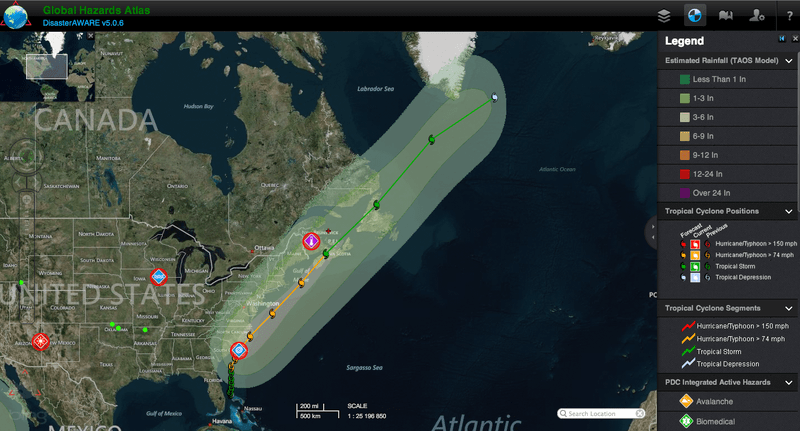
Strengthening into a hurricane overnight, Hurricane Arthur is forecast to deliver heavy rains and strong winds to the eastern coast of the United States as the nation celebrates its independence. According to the National Hurricane Center (NHC), Arthur is predicted to cause heavy rain across the Carolinas, cause flooding from storm surge, and produce dangerous rip currents along the coasts of several southern states. These anticipated conditions have prompted officials in several states to close beaches and tourist sites, and to delay fireworks shows.
Hurricane and tropical storm watches were already in effect on Wednesday, July 2, from Florida to North Carolina. North Carolina’s Governor declared a state of emergency for 25 eastern counties to prepare for possible damage. In addition, a voluntary evacuation order was issued for low-lying Ocracoke Island, a popular summer tourist destination.
As of this morning, Thursday, the center of Arthur is expected to graze the North Carolina coast during the next 24 hours, however a slight westward shift in the track could bring the strongest winds inland. The forecast track brings the center near or over portions of Nova Scotia and Newfoundland in two or three days.
As the first named storm of the 2014 Atlantic hurricane season, Hurricane Arthur is a reminder for residents in areas vulnerable to tropical storms and hurricanes to prepare for the storm season ahead.
For more information on Hurricane Arthur:
• Visit the National Hurricane Center, or
• Read an article by Reuters.
ABOUT PDC
Pacific Disaster Center (PDC) is a leading scientific innovator of global risk reduction science and technology. As a University of Hawai’i applied science and research center, our work intersects with a variety of government, community, academic, and scientific organizations at home and around the world to build resilience to natural and man-made hazards—enhancing the capacity to quickly and accurately anticipate and prepare for new and emerging threats. Our innovations in multi-hazard early warning systems, predictive analytics, data science, and machine learning provide decision-makers with the powerful tools and insights they need to navigate today’s complex and interconnected risk landscape.