Response and Recovery Support for the 2010 Haiti Earthquake
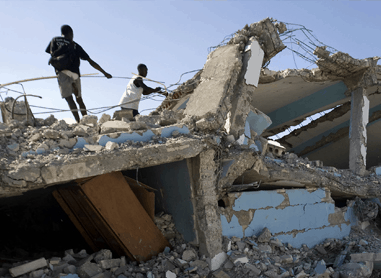
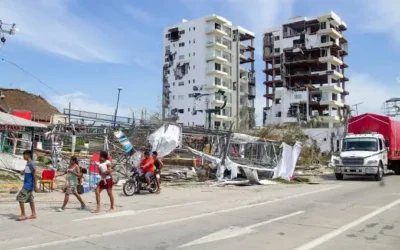
Access to reliable information plays a key role in effective response and is the first step toward meaningful recovery. On January 12, 2010, a 7.0-magnitude earthquake struck the Republic of Haiti, followed by at least 33 aftershocks. The devastating earthquake claimed more than 315,000 lives and left about one million people homeless.
Using geospatial data from trusted sources, PDC produced overview maps of Port-au-Prince and the surrounding communities and published the products through its DisasterAWARE® decision support platform. Assisted by satellite imagery released in the days following the earthquake, PDC analysts identified impassible roads, areas significantly impacted by collapsed infrastructure, and the locations of health care facilities and impromptu encampments of internally displaced persons. The maps and datasets provided rapid assessments to emergency responders, helping them to identify more suitable camp sites, to share the status of operational hospitals, to maintain awareness of safe and hazardous water resources, and to establish aid distribution centers. When a cholera epidemic spread throughout Haiti ten months after the earthquake, PDC used geospatial tools to help relief organizations identify both urgent needs—like clean water and medical services—and the needed resources, connecting people and communities with real solutions.
ABOUT PDC
Pacific Disaster Center (PDC) is a leading scientific innovator of global risk reduction science and technology. As a University of Hawai’i applied science and research center, our work intersects with a variety of government, community, academic, and scientific organizations at home and around the world to build resilience to natural and man-made hazards—enhancing the capacity to quickly and accurately anticipate and prepare for new and emerging threats. Our innovations in multi-hazard early warning systems, predictive analytics, data science, and machine learning provide decision-makers with the powerful tools and insights they need to navigate today’s complex and interconnected risk landscape.