Modeling Sulfur Dioxide Emissions from Kilauea Volcano
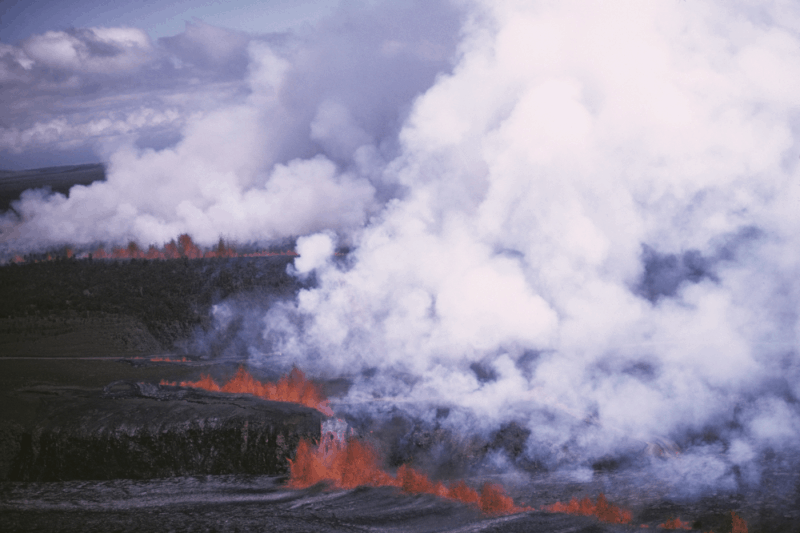
Exposure to volcanic gases and associated hazards like volcanic smog (vog) and acid rain can negatively impact human and animal health, as well as the environment. In March 2008, Kilauea Volcano on the island of Hawaii began emitting potentially harmful levels of sulfur dioxide (SO2). Following the event, Hawaii National Guard’s 93rd Civil Support Team (CST) began providing daily models of the gas plumes.
In April, at the request of Hawaii County and CST, PDC took over the daily modeling task, using the Hazard Prediction and Assessment Capability (HPAC) software to simulate plume dispersion and predict the movement of the hazardous gas. For several months, PDC’s modeling team generated 24-hour plume model products on business days and 48-hour products on weekends. PDC’s innovative use of hazardous gas modeling capabilities helped estimate concentrated toxic plumes under different weather conditions, and assisted the Mayor and the authorities in making critical evacuation decisions.
ABOUT PDC
Pacific Disaster Center (PDC) is a leading scientific innovator of global risk reduction science and technology. As a University of Hawai’i applied science and research center, our work intersects with a variety of government, community, academic, and scientific organizations at home and around the world to build resilience to natural and man-made hazards—enhancing the capacity to quickly and accurately anticipate and prepare for new and emerging threats. Our innovations in multi-hazard early warning systems, predictive analytics, data science, and machine learning provide decision-makers with the powerful tools and insights they need to navigate today’s complex and interconnected risk landscape.