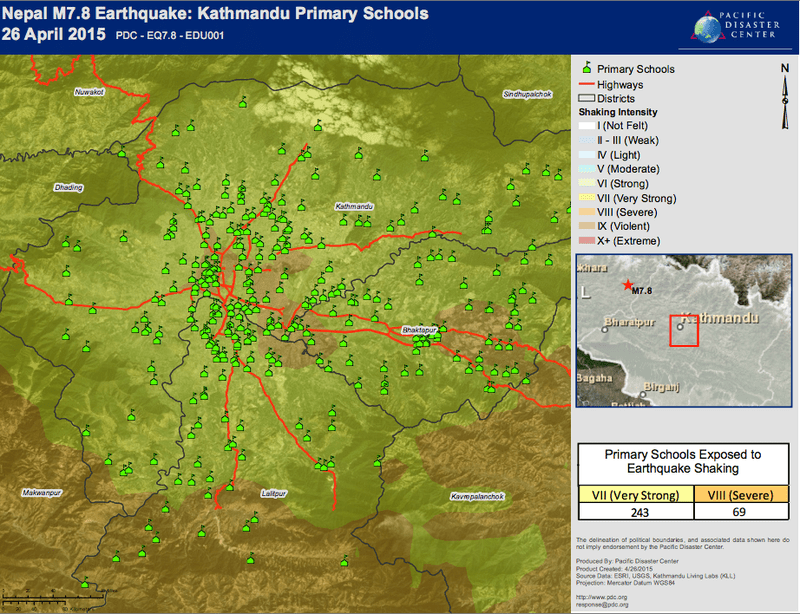
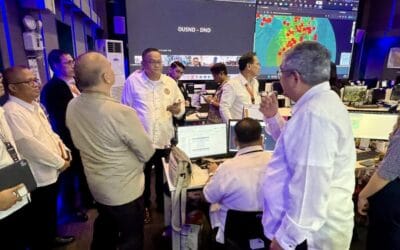
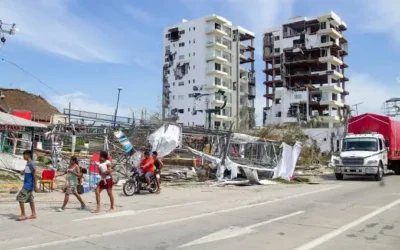
As part of ongoing preparedness activities, many involved agencies and organizations within Nepal and the international community have been building and enhancing data resources to ensure information is available for disaster response, recovery, and future risk reduction activities.
For the last three years, Pacific Disaster Center (PDC) has been working with Nepal to enhance the countries GIS and data capacity. As part of an initiative to implement tools and methods for integrating available geospatial data holdings, PDC’s DisasterAWARE EMOPS system offers emergency managers access to shared information and interagency updates.
EMOPS users are able to combine baseline data, such as information for borders, districts, wards, and fundamental infrastructure, with other available dynamic data such as aftershocks to support decision-making. PDC is also receiving requests for data and information via response@pdc.org.
Along with information sharing offered through DisasterAWARE, PDC also hosts a web-accessible catalog of data available from partners of the Global Hazards Information Network (GHIN), which is a partnership of national and international organizations providing decision makers access to high-quality geospatial information for risk assessment, early warning, response, and other disaster management related activities.
Learn more:
- EMOPS account, or
- About GHIN or becoming a Network partner
ABOUT PDC
Pacific Disaster Center (PDC) is a leading scientific innovator of global risk reduction science and technology. As a University of Hawai’i applied science and research center, our work intersects with a variety of government, community, academic, and scientific organizations at home and around the world to build resilience to natural and man-made hazards—enhancing the capacity to quickly and accurately anticipate and prepare for new and emerging threats. Our innovations in multi-hazard early warning systems, predictive analytics, data science, and machine learning provide decision-makers with the powerful tools and insights they need to navigate today’s complex and interconnected risk landscape.